Wonik Robotics Launches Allegro Hand V6 F, a Five-Finger Robot Hand Geared for Data Platforms
TECHWORLD ·
✦ AI Summary
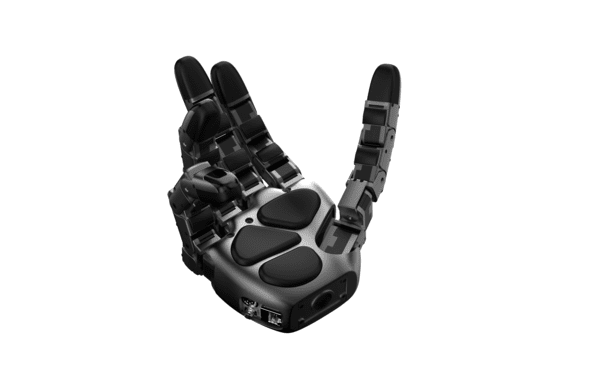
Wonik Robotics has launched the five-finger, 20-DoF multi-joint robot hand Allegro Hand V6 F.
V6 F expands the existing four-finger lineup into a five-finger structure and applies full-hand contact-detection pressure sensing and selectable control functions.
The company said it is positioning V6 F as a platform capable of securing data for Physical AI training, and that development was accelerated in connection with a plan to raise equity investment worth KRW 350 billion.
Robot automation company Wonik Robotics has launched the five-finger robot hand Allegro Hand V6 F, which goes beyond manipulation functions and is oriented toward a data platform. Wonik Robotics said it released the new product after accelerating development in line with attracting investment from the National Growth Fund.
Wonik Robotics said it has launched the five-finger, 20-DoF multi-joint robot hand Allegro Hand V6 F. The shorthand for Allegro Hand V6 F is V6 F.
V6 F is notable for expanding the existing four-finger Allegro Hand lineup into a five-finger structure. It also applies full-hand contact-detection pressure sensing and combines control functions that can be selected depending on the intended use.
Wonik Robotics said V6 F is more than a product that simply increases the number of fingers. The company said it aims to be a platform capable of handling complex manipulation while also securing data for Physical AI training.
The company said the launch of V6 F is linked to a recently finalized plan to raise equity investment worth a total of KRW 350 billion. The KRW 350 billion funding package consists of KRW 150 billion from the National Growth Fund's Advanced Strategic Industry Fund and KRW 200 billion from private investors, and the investment funds are slated for building a robot-hand production plant in Wanju, North Jeolla Province, and an AX center in Wanju, North Jeolla Province.
The company outlined plans to strengthen mass-production capabilities for robot hands, internalize core components, bolster Physical AI research and development, and reinforce data factory infrastructure.
It also said the five-finger structure would broaden the range of applications in humanoid and AI-based manipulation environments. The company said this is the result of adding a fifth finger and a total of 20 additional DoF to the precision manipulation technology accumulated through its existing four-finger model.
The company said the five-finger structure makes it possible to diversify grasping postures and contact points. It also said it applied a more compact design that reduces the overall size by more than 20% from the previous model.
The smaller size also makes it easier to apply the hand to tools and work environments designed for humans when mounted on a humanoid, the company said. As a result, it said, the hand can more easily handle objects of different sizes and shapes as well as tasks that require changing grip posture. It also said the hand can be more naturally applied to teleoperation environments based on a human hand and to imitation learning environments based on a human hand.
Full-Hand Sensing is a concept that expands the role of a robot hand from a moving device to a platform for acquiring contact data. To this end, pressure sensors were placed in the fingertips, finger joints, and palm, which are the main contact areas.
With this configuration, the hand can identify contact locations, contact timing, and pressure changes during grasping and manipulation. A light-indicator function for contact status was also added to the fingertips.
This visual feedback is intended to help operators and developers intuitively check the grasping state. The data collected in this way is used for grasp success and failure analysis, calibration, manipulation algorithm development, and the building of AI training and evaluation data.
Wonik Robotics said it has a plan to add various sensor options. The company said it plans to develop the V6 lineup into a purpose-specific data collection platform through the addition of various sensor options.
It also developed a new control method. The control method can be selected according to the user's system and the task objective, and users can choose current or position command values. The hand can also be linked with existing controllers and software architectures.
Stiffness control is a technology for increasing or reducing the force of a robot hand depending on the situation. Similar to how a human hand adjusts force in different situations, the key is changing the robot hand's response by task. When grasping heavy or hard objects, the hand stiffness is increased for stable fixation, and when handling fragile objects such as glass cups, the force is reduced for a gentler grip.
It also absorbs impact in tasks that may involve collisions with people or surrounding objects so that safe operation is possible. In this way, stiffness control changes the hand's force and response according to the characteristics of the object and the risk level of the task.
V6 F supports Modbus communication. As a result, users can link V6 F with various robot and automation systems, and the company can reduce integration burden when expanding research-stage hands into real-world systems.
To ensure control stability, friction and temperature compensation algorithms have been applied. This can reduce control errors that may arise from changes in friction and temperature during operation, and it enables consistent hand performance even as operating conditions change.
Wonik Robotics said it expects to be able to leverage the V6 F launch. The company said its expectations include expanding the domestic base for robot components and mass production, as well as the global Physical AI research ecosystem.
The Allegro Hand ecosystem has a track record of use by more than 180 research partners, and Wonik Robotics announced plans based on that foundation. In South Korea, the company plans to strengthen key robot-hand components, data infrastructure, and mass-production infrastructure, while overseas it plans to expand the range of applications for its common hardware platform.
The common hardware platform will be used for humanoids, teleoperation, and AI manipulation research. Wonik Robotics is also planning to expand the V6 lineup, including the Allegro Hand V6 V with vision-based Tactile sensor applications. Through this, it plans to support users in selecting sensor configurations tailored to specific tasks.
Kim Min-cheol, head of Wonik Robotics' robot-hand division, said stable grasping and manipulation of various objects require contact-detection sensing technology and precision control technology. He said the foundation of V6 F includes pressure sensing in key contact areas, precision control, and system connectivity, and explained that it was developed with the goal of supporting a wide range of robot environments, from research and development to humanoid robots and industrial automation.
Source: TECHWORLD · Lee Gwang-jae
Original: https://www.epnc.co.kr/news/articleView.html?idxno=406447
References
This article was produced with the help of an automated content generation algorithm.
Source: TECHWORLD
View originalThis article was summarized and organized by BizCrush based on the original article from TECHWORLD. For exact quotations and full details, please refer to the original article.