GLUCK Hosts 3rd Offline 3D Printing Education Seminar, Runs Three Practical Sessions
TECHWORLD ·
✦ AI Summary
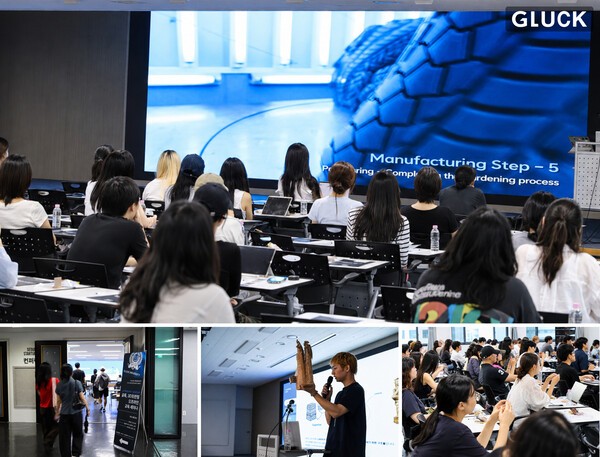
GLUCK held the "3rd Offline 3D Printing Education Seminar" for university students and prospective creators on August 28, with about 250 people participating.
The seminar ran in three sessions: 3D printing basics, productization and manufacturing processes, and manufacturing startups and funding.
GLUCK covered how to connect work creation with productization, market validation, and manufacturing startups rather than separating them.
GLUCK, a mass-production manufacturing company based on industrial SLA 3D printing, held the "3rd Offline 3D Printing Education Seminar" for university students and prospective creators on August 28. About 250 people took part in the program. Compared with about 50 participants in last year's offline seminar, attendance rose by roughly five times.
GLUCK expanded this year's seminar program. The expansion was intended to help participants better understand the manufacturing knowledge needed to turn ideas and graduation projects into real products. As a result, the seminar was structured to go beyond a simple introduction to technology.
The training was conducted in three sessions. Session 1 covered 3D printing basics, Session 2 covered productization and manufacturing processes, and Session 3 covered manufacturing startups and funding.
The Session 1 basics class covered practical standards for linking student-made 3D data to actual output. It also explained the basic principles of 3D printing. In addition, it used real-world examples to explain the key factors that affect the quality of the final output during the production process.
It also introduced post-processing steps such as surface polishing and painting after printing. The session also covered how finished outputs are completed through post-processing.
The training explained, through case studies, how student ideas become real products by going through design, prototyping, and production. The productization and manufacturing process session focused on the conversion of ideas and 3D data into actual products, and was centered on real productization cases.
The session covered design review, prototype production, manufacturing method selection, post-processing, and initial production. It also focused on understanding the difference between design and manufacturing in the graduation project process, while encouraging consideration of real-world producibility from the early stages.
At the same time, the manufacturing startup and funding session introduced the process by which graduation projects develop into actual commercial products. The goal was to prevent graduation projects from ending as simple exhibition pieces, and the session was organized around the practical steps needed for manufacturing startups.
Specifically, it covered product viability checks, sales readiness checks, prototype validation, selecting the appropriate manufacturing method, determining production volume, initial production, and market validation through crowdfunding. Through this, it addressed the process of connecting graduation projects not just to exhibitions, but to productization, market validation, and manufacturing startups.
GLUCK said the core message of this education was the inseparability of "work creation" and "productization." The company emphasized preventing graduation exhibition ideas from ending in the exhibition hall, and stressed that student ideas can be transformed into products that consumers can buy, while also serving as a starting point for new manufacturing startups, with manufacturing and market perspectives presented together.
Hong Jae-ok, CEO of GLUCK, said the sharp increase in offline seminar participants from about 50 last year to about 250 this year reflects how student interest has expanded beyond learning 3D printing equipment itself to the actual productization of ideas. He added that the company plans to continue expanding opportunities for more students and creators to experience 3D printing firsthand, and to keep creating touchpoints for them to use 3D printing in their own projects.
Source: TECHWORLD · Lee Gwang-jae
Original: https://www.epnc.co.kr/news/articleView.html?idxno=406448
References
This article was produced with the help of an automated content generation algorithm.
Source: TECHWORLD
View originalThis article was summarized and organized by BizCrush based on the original article from TECHWORLD. For exact quotations and full details, please refer to the original article.