Siemens Launches Next-Generation Automatic Fire Detection System, “SRF 2.2”
TECHWORLD ·
✦ AI Summary
The Smart Infrastructure (SI) division of Siemens Korea announced the launch of the next-generation automatic fire detection system, the “SRF 2.2 system.”
Siemens said the system can be applied to a wide range of commercial and industrial buildings, including office buildings, hospitals, data centers, and industrial facilities.
Siemens said the SRF 2.2 system features an intuitive interface, data visualization, enhanced cybersecurity functions, and a “Secure Boot” function.
The Smart Infrastructure (SI) division of Siemens Korea announced the launch of the next-generation automatic fire detection system, the “SRF 2.2 system.” Siemens said that as the digital transformation of building operations accelerates and management environments become more complex, fire safety systems are being required to deliver higher levels of connectivity, operational efficiency, security, and scalability.
Siemens said that, in line with these changes, fire detection systems are evolving from simple detection and alarm equipment into integrated platforms. These integrated platforms are characterized by their ability to respond flexibly to various environmental changes based on operational data.
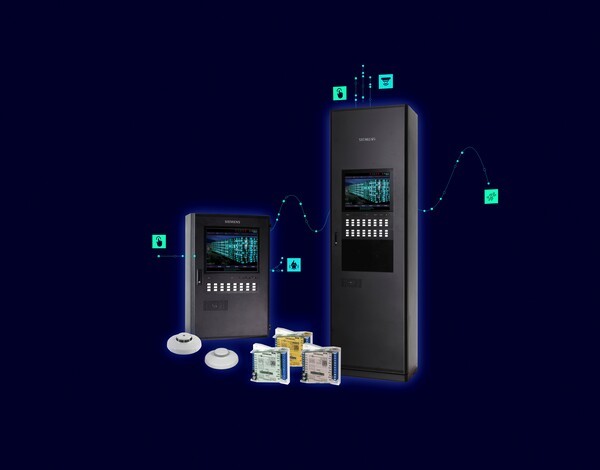
Siemens said the “SRF 2.2 system” was developed to meet these market changes and demands. The system can be applied to a wide range of commercial and industrial buildings, including office buildings, hospitals, data centers, and industrial facilities, and provides data-driven efficient operational management and enhanced cybersecurity functions.
The “SRF 2.2 system” is a future-oriented platform optimized for IoT and digital environments, and it features a user-friendly experience based on an intuitive interface, proactive diagnostics and maintenance functions, and significantly strengthened cybersecurity functions. Siemens said this can greatly improve operational efficiency and system reliability.
The company said it applied a high-performance CPU module based on the Common Component Platform (CCP), Siemens' global standard software architecture, to the SRF 2.2 system, enabling flexible responses to changing operating environments and system requirements.
It also said it applied an intuitive interface reflecting Siemens UI standards, simplified the screen layout, and minimized operating steps to support efficient system operation. In addition, it said the system is equipped with an upgraded 17-inch high-resolution LCD display compared with previous models, improving visibility and delivering a more convenient user experience through faster screen transitions and faster touch response.
For maintenance, it added, the company has significantly strengthened data visualization functions to provide operational data visualization in various formats. This allows operators to easily identify recurring events and patterns and to detect potential issues at an early stage.
Siemens said that by adopting global standard hardware components and providing regular OS and software updates, it has achieved consistent quality, a stable parts supply system, the ongoing improvement of system connectivity, and the ongoing improvement of system scalability. Based on this, it said faster and more accurate decision-making, reduced risk, and stable facility operations are possible.
Siemens also said it reflected its global cybersecurity policy from the design stage of the SRF 2.2 system in response to external threats, and that it provides a dedicated secure environment for the safe transfer of programs. It said this is helping strengthen cybersecurity.
In addition, Siemens said the SRF 2.2 system features an immediate warning sound when the receiver door is opened, event log recording when the receiver door is opened, three levels of user access permissions, and protection for key system settings. It added that with the application of the “Secure Boot” function, unauthorized software execution can be blocked, helping improve system operational stability and build a secure digital environment.
Jung Ha-jung, CEO of Siemens Korea, said the role of fire safety has gone beyond simple accident response and is now a key element for protecting lives and ensuring business continuity in increasingly complex digital building environments. He added that Siemens Korea will use continuous technological innovation to provide a safer and more reliable building operations environment through the SRF 2.2 system, and contribute to building a sustainable smart building ecosystem.
Source: TECHWORLD · Lee Gwang-jae
Original: https://www.epnc.co.kr/news/articleView.html?idxno=406316
References
This article was produced with the help of an automated content generation algorithm.
Source: TECHWORLD
View originalThis article was summarized and organized by BizCrush based on the original article from TECHWORLD. For exact quotations and full details, please refer to the original article.