Ericsson: Networks Will Carry More Than Data, They’ll Carry “Intelligence”
IT DAILY ·
✦ AI Summary
Ericsson presented AI-RAN and ISAC as core 6G technologies as it marked its 150th anniversary.
AI-RAN is a technology that applies AI across base stations and wireless networks to pursue performance optimization and lower operating costs.
ISAC is a technology that simultaneously handles data transmission and reception and sensing of the surrounding environment with a single radio frequency and antenna equipment set.
Global telecom equipment company Ericsson marked its 150th anniversary by presenting AI-RAN and ISAC as core 6G technologies in response to the spread of AI.
Ericsson introduced AI-RAN as a next-generation wireless network technology. AI-RAN refers to the application of AI across base stations and wireless networks.
AI-RAN is a technology aimed at enabling autonomous network performance optimization and reducing operating costs.
Ericsson also presented ISAC. ISAC is a network technology that simultaneously processes data transmission and reception and sensing of the surrounding environment by using a single radio frequency and antenna equipment set.
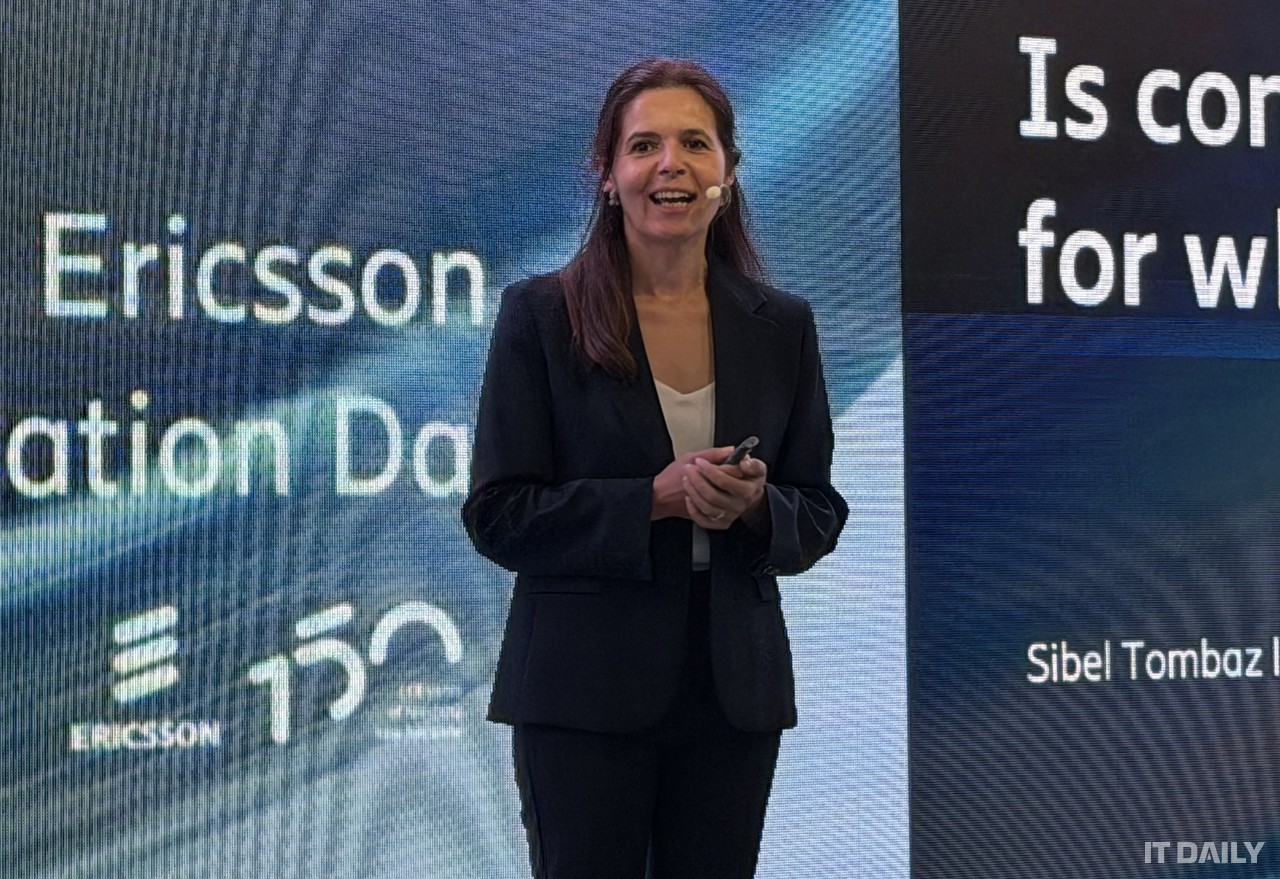
On the 1st, Sibyl Tombaz, CEO of Ericsson Korea, announced this direction for next-generation networks. Sibyl Tombaz said that the network is AI-based infrastructure.
Sibyl Tombaz explained that the role of networks is expanding from carrying data to carrying intelligence, and shared Ericsson’s direction for next-generation networks.
As new AI applications such as AI glasses, autonomous driving, and robots emerge, and as AI glasses, robots, and autonomous driving spread, network performance requirements are changing. While the focus of traditional mobile network development had been downlink performance for video viewing and content downloads, higher uplink capacity, consistent low latency, reliability, and mobility are now required as essential elements, along with the growing importance of uplink.
Ericsson is paying attention to future uplink traffic growth. According to Ericsson’s outlook, uplink traffic will increase by about 3 to 5 times by 2030, and analysis of the limits of current commercial 5G networks showed that responding to the trend of uplink traffic growth, which accounts for about 40% of total traffic, is insufficient.
Ericsson said network evolution is needed in response. As conditions for smoothly supporting AI-based applications and robotics, millisecond (ms)-level latency and stable uplink performance were cited, and the company said these need to be reflected from the network design stage. It also said the network itself must use AI to improve performance, increase energy efficiency, and automate operations, while evolving into an intelligent platform.
Ericsson presented AI-RAN as the key to network evolution. AI-RAN, as defined by Ericsson, is not a concept limited to a single product or a specific AI accelerator, but an architecture that applies AI across all layers of the radio access network (RAN). The core of this structure is to deliver the network performance required by AI applications while also improving the network’s own performance and operational efficiency through the use of AI.
Matteo Fiorani, head of Ericsson’s Network Portfolio, introduced 'AI in RAN,' which was launched this year, and described it as a representative example. AI in RAN is software that runs real-time AI models inside the RAN and performs functions for network performance optimization and operational optimization.
Ericsson said the AI in RAN software and AI-ready hardware are responsible for converting existing 5G networks into AI-native networks. It added that the software and hardware also support RAN automation, assist network operations, and provide AI inference capabilities. Ericsson uses its own developed silicon in this process.
The photo shows Tomas Sandin, head of Ericsson Radio Portfolio Management, introducing Ericsson silicon. The photo credit is to reporter Won-young Seong.
This is not Ericsson’s first time developing its own silicon. Ericsson has been developing in-house silicon for networks for more than 20 years.
Recently, an approach using GPU-based general-purpose servers has been spreading in the AI-RAN ecosystem. However, Ericsson continues to develop its own silicon for real-time network response. An Ericsson official explained that general-purpose computing devices such as GPUs can process large volumes of data in batches, but their response times may be slow. The official added that Ericsson silicon is designed to respond to changes in the network environment at the millisecond level.
Along with AI-RAN, Ericsson presented ISAC as a core technology for the 6G era. ISAC is a technology that combines Communication and Sensing, and can simultaneously detect the location and movement of surrounding objects by using radio signals for data transmission.
Ericsson presented drone detection as a representative use case for ISAC. It said that at airports and other locations, Public Safety use is possible through bird and drone detection, and that on roads it can be used to improve traffic safety by detecting vehicles and surrounding objects.
Ericsson has built an ISAC field site in Sweden and is verifying related technologies and use cases. Through this, it said the role of networks can expand from data delivery to the perception of surrounding environments and the provision of situational information.
CEO Tombaz said the company plans to support Korean customers and partners in realizing new service and business opportunities based on AI-RAN, ISAC, differentiated connectivity, and 6G-based technology leadership.
Source: IT DAILY · Won-young Seong
Original: https://www.itdaily.kr/news/articleView.html?idxno=241331
References
This article was produced with the help of an automated content generation algorithm.
Source: IT DAILY
View originalThis article was summarized and organized by BizCrush based on the original article from IT DAILY. For exact quotations and full details, please refer to the original article.