IBM Unveils Blueprint to Redesign Companies With AI
IT DAILY ·
✦ AI Summary
At the 'IBM AI Summit Korea,' Lee Su-jeong, president of IBM Korea, presented a blueprint for redesigning companies through AI.
She said AI's true value lies in redesigning businesses as a whole beyond writing documents and summarizing meetings, and that AI should be expanded from an individual task assistant to a stage that changes the entire way an organization operates.
IBM presented AI First Enterprise, hybrid cloud, and quantum computers as the core pillars of sustainable AX, and introduced 'BOB' and its quantum computing research achievements as representative solutions.
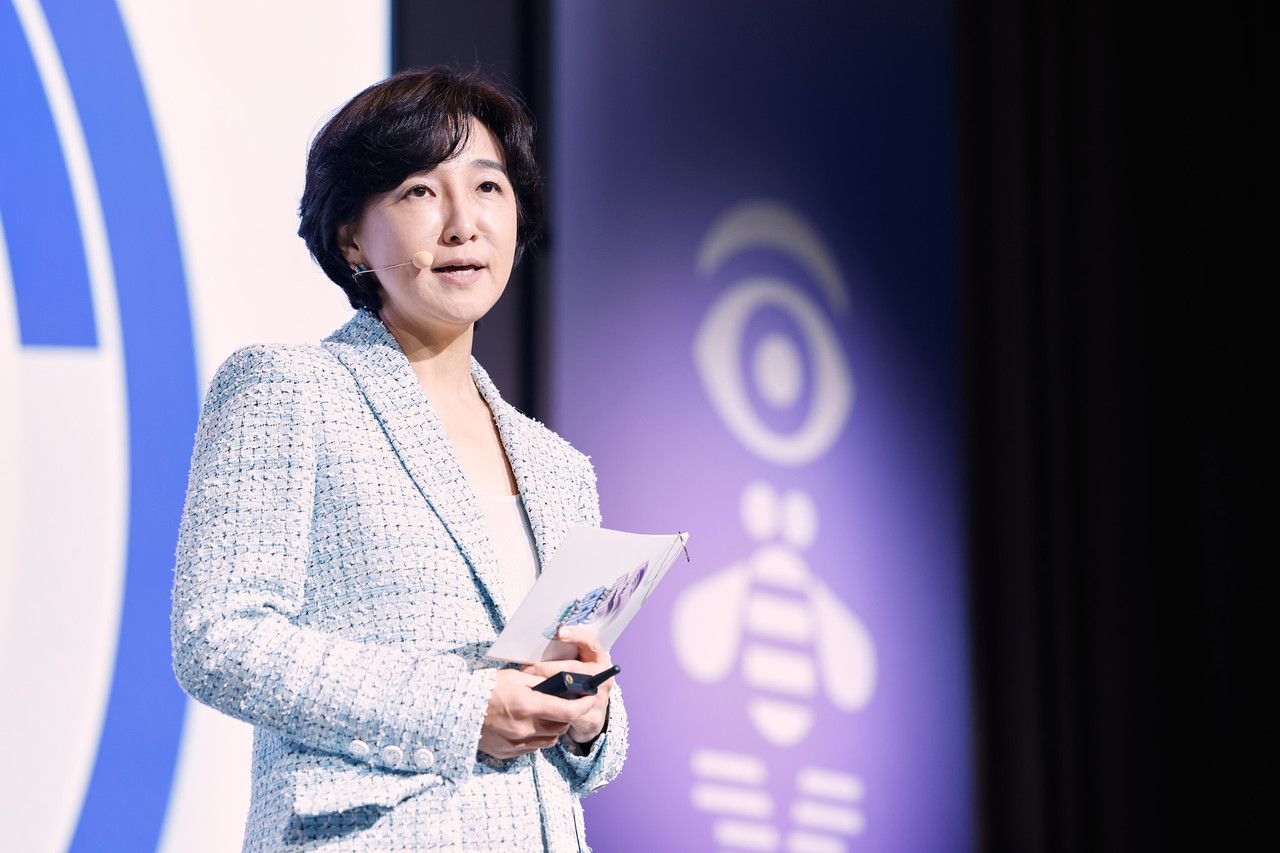
IT Daily reported that at the 'IBM AI Summit Korea' held on the 1st at The Westin Seoul Parnas, Lee Su-jeong, president of IBM Korea, presented a blueprint for redesigning companies through AI. The article was headlined, "Redesigning Companies With AI"... IBM's Blueprint for Innovation. The photo shows Lee delivering a keynote speech at the 'IBM AI Summit Korea' at The Westin Seoul Parnas on the 1st.
Lee cited the light bulb as an early, tangible example of innovation during the initial spread of electricity, and pointed to electric power, motors, and assembly lines as technologies that drove fundamental changes on the factory floor. He said AI is following the same path today.
Lee said AI's true value goes beyond writing documents and summarizing meetings, and lies in redesigning businesses as a whole. He also stressed that companies must move beyond vague expectations for AI and connect it to work and operations to deliver results.
Lee said the key going forward is expanding AI across the entire organization. He stressed that AI should not be confined to supporting individual tasks, but should advance to a stage where it changes the entire way an organization operates.
Many companies cite improved productivity as the expected benefit of AX and AI Transformation. IBM's Institute for Business Value (IBV) released the 'Enterprise 2030' report in January, and executives surveyed projected that AI would improve productivity by more than 42% by 2030. This underscores the huge potential of AI.
But difficulties in field implementation were also evident. In the 'Enterprise 2030' survey, 79% of respondents said AI would drive revenue growth, but only 24% said they had identified specific revenue sources. The market situation can also be summed up as a huge, vague expectation for AI, highlighting the gap between anticipated contributions to growth and actual execution.
Lee emphasized that the approach to AI for results on the factory floor must be taken at the operational level. He also advised focusing more on how AI connects to work and business than on the technology itself.
IBM presented AI First Enterprise, hybrid cloud, and quantum computers as the core pillars that will support the sustainability of AX. AI First Enterprise refers to a corporate operating structure rebuilt around AI, and it is a strategy aimed at improving efficiency through an AI-based work environment. IBM likened this to improving production speed on manufacturing assembly lines, connecting it to efficiency gains in AI-based work environments.
IBM presented 'BOB' as the representative solution for driving AI First Enterprise. Launched by IBM in April this year, 'BOB' is an AI-based development partner and a solution that goes beyond a simple code-generation tool. Its scope covers the entire software lifecycle, including planning, development, testing, deployment, and operations.
Lee described BOB as a new model that turns AI from a tool into a work operating system. He added that the key going forward lies in the range of data an agent can access while performing tasks, and in the possibilities for design based on that data.
It was noted that conditions for completing the AI transformation cannot be met by model selection alone, and that infrastructure and architecture support are needed on the premise of real-world operation. Lee said trusted data and a stable hybrid cloud are required for AI performance, and identified the task for South Korean companies as expanding AI from the experimental stage to the scale of entire industries after ending the pilot phase.
IBM has strengthened its related capabilities by acquiring Red Hat and HashiCorp to implement hybrid cloud. Against this backdrop, Lee pointed to AI's ability to connect data, systems, and operating environments as a condition for leading the market in the future.
Meanwhile, the 'IBM AI Summit Korea' was held on the 1st at The Westin Seoul Parnas. Dr. Baek Han-hee of IBM Research and director of the Quantum Algorithm Center gave a presentation under the theme, 'Beyond AI, Quantum Opens the Next Generation of Computing.' Photo source: IBM Korea.
Quantum computers were presented as a future technology distinct from AI. Quantum computers are next-generation computers based on the principles of quantum mechanics.
Conventional computers use 0 and 1 bits (Bit) as units of information processing, but quantum computers use qubits (Qubit) as their basic unit of computation. Quantum computers differ from conventional computers in both their information-processing units and operating principles.
Qubits have properties such as superposition (Superposition) and entanglement (Entanglement), and based on these, quantum computers can perform different calculations in parallel. As a result, quantum computers outperform conventional computers in certain calculations and are strong in areas such as differential equations and linear algebra. While classical computers face high difficulty in solving some problems, quantum computers can solve such problems effectively.
Dr. Baek Han-hee of IBM Research and director of the Quantum Algorithm Center said quantum computers represent a new way of computing unprecedented since the emergence of the computer concept. She also said they are a new technology that solves previously unsolvable problems in a different way.
IBM is one of the leaders in quantum computer research, having started research in 1980 and participated in the development of the first 2-qubit quantum computer in 1998. IBM then unveiled its 127-qubit 'Eagle' processor in 2023, proving through 'Eagle' that quantum computers are at a level comparable to existing computer tools. IBM named this 'Quantum Utility.'
In July this year, a joint study by IBM and University of Chicago researchers used a quantum computer to perform calculations that are difficult to solve with classical computers, and IBM announced that it had demonstrated 'Quantum Advantage' through the achievement. Based on this, IBM said quantum computers are no longer a distant future. According to IBM, Boeing is applying quantum computers to aircraft material design and new material research, while HSBC is using quantum computers in bond-trading algorithms to improve predictive performance.
IBM is aiming for a 'quantum-centric supercomputer' that combines CPU, GPU, and QPU. This structure leverages the strengths of high-performance computers and quantum computers together, with the hallmark of significantly improving computing power. This approach is also reflected in the case of Japan's RIKEN, which is operating Fugaku, the supercomputer 'Fugaku,' in conjunction with the quantum computer 'IBM Quantum System Two.'
Dr. Baek said quantum computers and high-performance computers each have different strengths. She said that elements solvable by current computers, such as arithmetic and matrix operations, will be handled by existing infrastructure, while problems that CPU and GPU cannot solve will be handled by quantum computers. She added that 'IBM Quantum Starling,' which has resolved error issues, is scheduled for deployment in 2029, and said that new possibilities will open once the system is built.
At booths inside the venue, a variety of technology demonstrations were offered so attendees could experience how AI is applied in work environments, and participants were able to check out IBM BOB as well as solutions for operating AI applications and infrastructure operations.
Source: IT DAILY · Kim Ho-jun
Original: https://www.itdaily.kr/news/articleView.html?idxno=241329
References
This article was produced with the help of an automated content generation algorithm.
Source: IT DAILY
View originalThis article was summarized and organized by BizCrush based on the original article from IT DAILY. For exact quotations and full details, please refer to the original article.