[Case Study] Seoul Facilities Corporation Builds Always-On Data Quality Management System With WeSeAiTech's WiseDQ
IT DAILY ·
✦ AI Summary
Seoul Facilities Corporation introduced WeSeAiTech's WiseDQ data quality management solution in May last year and built a system for managing data quality on an ongoing basis.
The corporation said it had been responding every year to the government's public data quality management level diagnosis and assessment, and that it needed a foundation for continuous checks and daily diagnosis and improvement.
After adopting WiseDQ, the corporation established systems for registering quality measurement standards, extracting and measuring target data, looking up errors and analyzing root causes, and linking improvement activities, and it received its first perfect score in the quality area last year.
Seoul Facilities Corporation has built a system to manage data quality on an ongoing basis, moving beyond annual assessment response, by using WeSeAiTech's data quality management solution, "WiseDQ." The corporation already had an always-on data quality management system in place and had responded every year to the government's public data quality management level diagnosis and assessment. With this system in place, the corporation has also laid the groundwork for daily data quality diagnosis and improvement.
This article introduces the corporation's WiseDQ-based adoption case. Seoul Facilities Corporation introduced WeSeAiTech's data quality management solution, "WiseDQ," through a competitive bid from the Public Procurement Service in May last year. WeSeAiTech is a company specializing in data and AI.
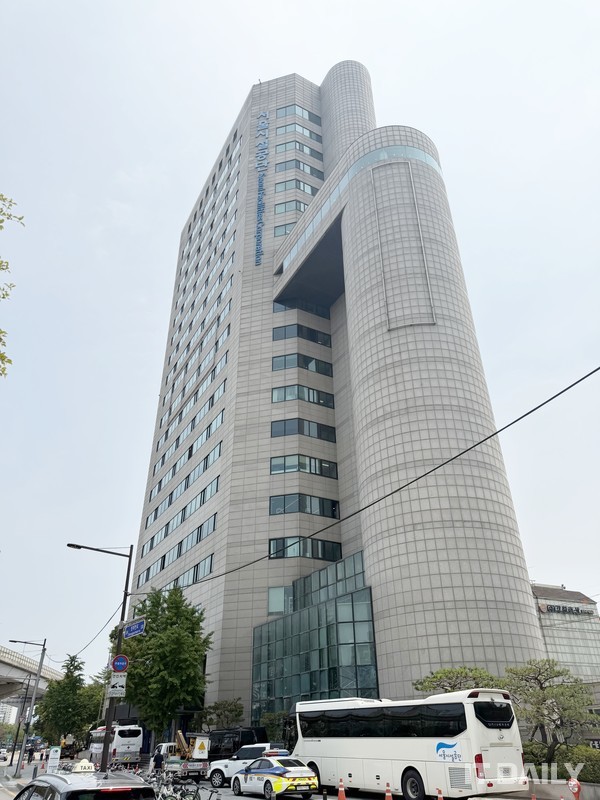
Seoul Facilities Corporation was established in September 1983. As South Korea's first local public corporation, it is responsible for managing and operating a range of public facilities.
The corporation manages and operates the Seoul World Cup Stadium and also handles the management and operation of Cheonggyecheon. In addition, it is responsible for the management and operation of roads designated for automobiles as well as underground shopping centers.
As an organization that manages and operates multiple facilities, the corporation has maintained a system for managing data quality on an ongoing basis and has responded every year to the government's public data quality management level diagnosis and assessment. With the introduction of WiseDQ, it laid the groundwork for daily data quality diagnosis and improvement and built an always-on data quality management system.
While overseeing multiple facilities, the corporation operates 7 departments and 8 systems to manage accumulated data, as data volumes differ widely by department. Electronic approval and ERP are shared systems for the organization, and the IT Strategy Office oversees all shared systems.
The corporation responds every year to the government's public data quality management level diagnosis and assessment. The assessment, organized by the Ministry of the Interior and Safety, is a system for diagnosing the quality of public data held and opened by institutions, and data quality management is a core area that institutions must manage annually.
The scope of the assessment has been expanding each year. The number of institutions subject to the public data quality management level diagnosis and assessment increased from 548 in 2021 to 685 in 2025, and the number of institutions applying for public data quality certification rose from 51 in 2023 to 96 in 2025. The number of common standard terms applied in database construction expanded from 1,686 in 2022 to 13,159 in 2025, increasing the burden and importance of data quality management as well.
Until now, the corporation has operated by using government-provided diagnostic tools and responding to data quality assessments. However, the need for constant data quality checks was raised, and that required an in-house system that could be used at any time regardless of the assessment schedule and whenever the organization needed it. This was intended to address the problem of concentrated quality management during the period for submitting assessment materials, which led to a temporary surge in the workload of quality managers, and to respond to the need for always-on management independent of timing.
Data standardization also remains an ongoing challenge. Because systems were built before standard term concepts and management frameworks were established, there are many cases in which data items with the same meaning are labeled or written differently across systems, making it highly necessary to identify nonstandard items. Accordingly, the need to unify them under a single standard has been raised, and the work of standardizing nonstandard items is a long-term task that cannot be completed in a short period and must be pursued continuously over several years.
Kim Hanna, deputy general manager in Seoul Facilities Corporation's IT Strategy Office, cited cases where the label for the "name" field differs by system. According to Kim, one system uses name, while another stores it as "full name" or in English, making immediately usable access difficult even for the same citizen data.
Kim also said that such differences in labeling require manual reconciliation. She added that when the data volume reaches hundreds of thousands or several million records, the workload increases.
To solve these problems, Seoul Facilities Corporation introduced WeSeAiTech's WiseDQ through a competitive bid from the Public Procurement Service in May last year. WiseDQ is a data quality management solution that supports the process of data quality diagnosis and error correction.
With WiseDQ, Seoul Facilities Corporation built a system for registering quality measurement standards and a system for extracting target data and measuring quality, and also created a workflow linking error data lookup, root-cause analysis, and improvement activities. Measurement and improvement results are stored in the quality database (DB) and staging DB, and through this Seoul Facilities Corporation secured a structure for managing diagnosis results and improvement data.
The system's effectiveness was confirmed in last year's assessment. The corporation supplemented its structural diagnosis area with consulting from WeSeAiTech, which led to its first perfect score in the quality area.
The corporation established an environment for continuously checking and diagnosing data quality and went beyond simply submitting diagnosis results to create a database-linked environment. In this environment, continuous quality checks and improvements became possible, and as department-level system managers began participating in ongoing management, the organization's data management culture also matured one step further.
Kim emphasized that the greatest significance of this adoption was its impact on citizens. She explained that when data is organized in a consistent format, it becomes easier for citizens to use, and she rated the biggest achievement as shifting away from assessment-centered response to a system-based, always-on quality inspection framework while laying the foundation for providing high-quality data to citizens.
Recently, the corporation made data disclosure mandatory for each department.
As a result, the amount of open data is increasing rapidly.
As data grows, the importance of quality management is also increasing.
Ensuring consistency and accuracy is considered a prerequisite for data utilization, and the users of that data include both people and AI.
Against this backdrop, Seoul Facilities Corporation built an always-on quality management system with the goal of preparing for an expanded data utilization environment.
When asked about the background to introducing the data quality management system, Kim Hanna, deputy general manager, explained that data quality management is one of the areas covered by the public data assessment and must be addressed every year.
Kim said the existing management approach ended with diagnosis and results submission timed to the assessment period, and even if errors were corrected after diagnosis, there was no system to support that work, making it difficult for the government to recheck improvements after the license expired. As a result, she said, there was a limit to connecting those efforts to substantive quality improvements.
For continuous quality management, there had to be a way to check and diagnose data regardless of timing. Accordingly, the corporation determined that it needed a solution that could be used at any time because it needed a system that could check and diagnose data status whenever required.
The procurement method during the adoption process was a competitive process targeting DQ certification providers without naming a specific vendor. Kim explained that the corporation was not initially focused on any particular company.
As a result of this selection process, the corporation came to work with WeSeAiTech. After that, it became clear that a large amount of manual work was involved in reflecting prior results submitted to the government.
WeSeAiTech adjusted that part to fit the corporation's environment. In addition, there was a request for a screen format similar to what staff were already familiar with, and that request was reflected.
Support went beyond building the solution and continued with consulting. The consulting focused on suggesting improvement directions, and Kim said that the careful support for the parts needed after adoption, along with those measures, was particularly helpful.
Team Leader Yang Jae-young of the IT Strategy Office explained, in relation to the importance of data standardization, that if a developer gives a field an arbitrary name, it becomes difficult for anyone but that person to identify it.
He said this creates confusion during maintenance and disclosure stages.
He also said that if the same item is labeled differently across systems, the receiving side can become confused about whether it is the same data.
Yang said that standard alignment is necessary so that data can be provided in the same form regardless of the institution.
He said the purpose is to improve citizens' convenience in using data.
He added that, during the process of building systems through in-house development or external outsourcing, differences in staff expertise can lead to noncompliance with standards or omissions.
He continued that even after a system is built, maintenance and new development continue, and standard erosion can occur in that process, stressing the need for periodic checks, verification, and correction.
Kim said the biggest change after adoption was that awareness of the need for continuous quality management had taken root. She said that, at the early stage of introducing the assessment system, many people viewed it as a temporary task, but after the adoption of the always-on system, the perception formed that it was a continuous duty for IT staff to participate in.
The organization made ongoing management possible through system-database linkage.
On that basis, it received its first perfect score in the quality area last year.
However, because structural issues remained apart from the score, the corporation also presented plans for continued improvement going forward.
In response to a question about whether other public institutions face similar challenges, Kim explained that naming inconsistencies are natural in institutions that have systems built before the Ministry of the Interior and Safety's data policies.
Kim said such institutions may also have similar concerns.
She added that if each institution builds a system suited to its own circumstances, overall public data quality could improve together.
Regarding future plans, Team Leader Yang said the focus is on linking the secured data quality to disclosure, and that the corporation is carrying out a project to convert existing file-based data releases to API-based releases.
The goal is to replace most file-based delivery with API-based delivery. As a result, each business unit will find it easier to open data, users will have a foundation for immediate use, and the data will be organized in a form suitable for AI use, expanding the scope of data utilization by citizens and the private sector.
Source: IT DAILY · Yang Seung-gap
Original: https://www.itdaily.kr/news/articleView.html?idxno=241309
References
This article was produced with the help of an automated content generation algorithm.
Source: IT DAILY
View originalThis article was summarized and organized by BizCrush based on the original article from IT DAILY. For exact quotations and full details, please refer to the original article.