Lee Hae-min to Presidential Office, Han Jeong-woo to Strategy Panel in AI Policy ‘Two-Track’ Setup
IT DAILY ·
✦ AI Summary
On the 30th, President Lee Jae-myung tapped Lee Hae-min, a lawmaker from the Rebuilding Korea Party, as senior presidential secretary for AI future planning at the presidential office, and named Han Jeong-woo, the current senior secretary for AI future planning, as vice chair of the Presidential National AI Strategy Committee.
The move is a reorganization into an AI policy "two-track" structure, with Han responsible for national AI strategy and technical priorities, and Lee for coordinating ministry policies and budgets and linking policy to industry, the public sector, and people’s daily lives.
The article says the appointments shift the center of AI policy from the first stage of securing foundational assets such as proprietary AI foundation models and GPUs to the second stage of actual AI use by companies and citizens, and that scrutiny of usefulness, efficiency, and scalability in dopamos and GPU projects is likely to intensify.
On the 30th, President Lee Jae-myung tapped Lee Hae-min, a lawmaker from the Rebuilding Korea Party, as senior presidential secretary for AI future planning at the presidential office, and named Han Jeong-woo, the current senior secretary for AI future planning, as vice chair of the Presidential National AI Strategy Committee. The move is being summed up as a reorganization into an AI policy "two-track" structure.
The appointment differs in nature from a routine reshuffle of senior secretaries. It amounts to a reconfiguration that moves Han Jeong-woo, who has overseen the AI policy blueprint since the government took office, to a national AI strategy review and coordination body, while placing Lee Hae-min in the presidential aide post.
As a result, Vice Chair nominee Han Jeong-woo will be responsible for designing the direction of the national AI strategy and its technical priorities. New senior secretary Lee Hae-min will coordinate policies and budgets across ministries at the presidential office and play a role in linking policy to industry, the public sector, and people’s daily lives.
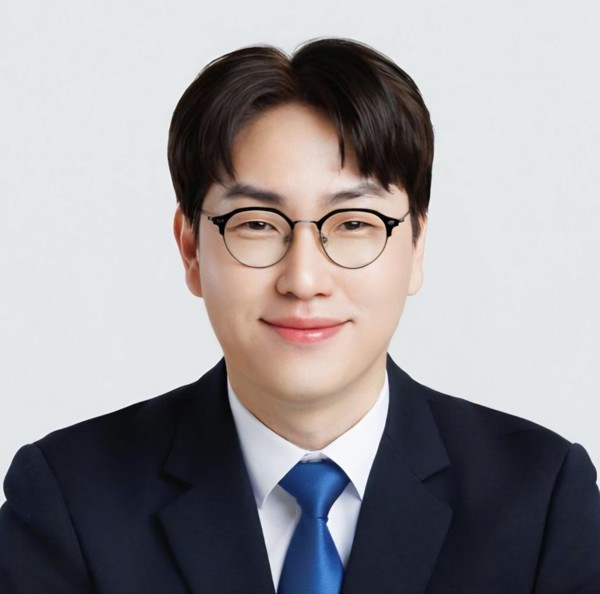
Lee Hae-min has worked at Google, startups, and in the National Assembly. The AI policy command structure has accordingly been reshaped into a setup of "Han Jeong-woo for strategy, Lee Hae-min for execution." The photo explains Han Jeong-woo, the new vice chair of the National AI Strategy Committee.
The appointments are being interpreted as a sign that the center of Lee Jae-myung administration AI policy is shifting from the first stage of securing foundational assets such as proprietary AI foundation models (dopamos) and GPUs to the second stage of actual AI use by companies and the public. It is being read as a signal that, to achieve the Lee Jae-myung administration’s goal of becoming one of the world’s top 3 AI powers, the policy focus is moving from infrastructure building to broader adoption.
At the same time, concerns have been raised that side effects of AI adoption, such as job losses and gaps between industries and regions, could also become policy agenda items as AI use expands. The fact that Han Jeong-woo is set to handle AI strategy formulation while Lee Hae-min takes on the role of linking industry and society is also in step with that trend.
Vice Chair nominee Han is a technology expert at Naver and has led the development of large-scale AI and "HyperCLOVA X." He was selected as the first senior secretary for AI future planning under the Lee Jae-myung administration and drafted the broad outlines of major policies including securing dopamos, securing GPUs, AI data centers, and AI transformation (AX) in the public and industrial sectors.
Han’s move to vice chair of the National AI Strategy Committee is being interpreted not as an interruption of the policy he designed, but as a way to ensure its continued advancement as a mid- to long-term national strategy in a presidential committee. The move is linked to a broader effort to carry forward the AI strategy he had already designed over the long term.
The National AI Strategy Committee is a public-private control tower. The chair is personally held by President Lee. The committee’s role is to gather views from the government, industry, academia, and civil society and determine the direction of national AI policy.
Within this structure, Han is expected to be responsible for designing national strategy and coordinating opinions from private-sector experts in line with changes in AI technology and industry. Since the committee brings together the views of multiple stakeholders to set the direction of national AI policy, Han is expected to take charge of strategy design and coordination within it.
By contrast, new senior secretary Lee has a different background from Han. He is seen as closer to a product-owner-style policymaker than a scientist directly researching and developing AI models. At Google, he was responsible for global service strategies such as Search and Maps, and as chief product officer (CPO) at OpenSurvey he oversaw product development and the organization as a whole. After entering the National Assembly, he focused on the AI Basic Act, sovereign AI, public cloud, and employment shocks from AI transformation as key issues.
Lee and Han share the view that sovereign AI should not be equated with simple localization. Lee has stressed that the core of sovereign AI does not lie in localizing every technical element, and has identified securing controllability — the ability for a state or company to change data, functions, and operational direction — as an important criterion. Han has also rejected the idea of sovereign AI as closed localization that excludes foreign technology, instead describing it as a strategy to secure a country’s command over core technologies and its room to choose.
Lee’s existing position is a two-track strategy that advances proprietary AI model development while also energizing the private sector. He has emphasized the need to secure proprietary models in areas that require state control, such as the public sector, defense, and security. At the same time, he has argued that if domestic models are effectively forced on ordinary companies, industrial AI transformation could be delayed.
In this way, both men acknowledge the need for independent AI capabilities while also sharing caution about cutting off ties with the global ecosystem. There is policy common ground between them in the view that proprietary models should be prioritized in areas requiring state control, while rigid localization should be avoided in the private sector.
Han places weight on the foundation of national AI capabilities, including models, computing infrastructure, and talent, while Lee Hae-min, the new senior presidential secretary for AI future planning, is seen as emphasizing corporate growth and the securing of global users through the use of that foundation.
If those differences are paired with a division of labor, the result could be a structure that allows technological sovereignty and industrial expansion to proceed in parallel. One side would focus on building national AI infrastructure, while the other would emphasize industrial use of that foundation and the securing of overseas users.
The photo caption for Lee Hae-min, the new senior presidential secretary for AI future planning, says Rebuilding Korea Party. Still, Lee is understood not to be someone who simply endorses the Lee Jae-myung administration’s AI policy unconditionally.
Soon after the government took office, Lee pointed out that sovereign AI should not become the entirety of national AI strategy. He also said in July last year that self-reliance and isolation are only a hair’s breadth apart, warning that if the country becomes fixated only on independent technologies, domestic industry could be isolated from the global AI ecosystem.
The view has emerged that sovereign AI should be pursued as a defensive strategy centered on the public and security sectors, while industry also needs an aggressive industrial policy that helps domestic developers and AI companies secure global users. The user market should likewise expand beyond the 50 million-person domestic market to target 100 million and 1 billion global users.
The appointments may also be interpreted as bringing a critic of government AI policy into the center of policy design, and as an attempt to strengthen internal checks and review functions at the presidential office. Accordingly, existing project directions such as securing dopamos and GPUs are likely to remain in place, but there is growing expectation that project purpose, practical usefulness, and private-sector effects will come under stricter scrutiny.
In particular, for the dopamos project, evaluation criteria are expected to expand beyond model benchmark scores and whether the models are domestically produced to include practical industrial usability, cost efficiency, accessibility for outside developers, and potential for global expansion. This suggests a possible shift from judging performance and localization alone to also considering usability, efficiency, and scalability while maintaining the existing policy direction.
There is also an expectation that, with Lee’s appointment, the scope of AI policy will expand from technology and industry to employment, education, and welfare. Lee recently sponsored 3 related bills, including the Framework Social Bill for Responding to the AI Transition, and those bills include provisions for a national strategy to respond to industrial transformation driven by AI, a 5-year master plan, and links between the master plan and policies on industry, employment, welfare, and education.
The proposed measures reflect a move to broaden national AI policy beyond support for corporate adoption of AI. National AI policy would include sharing the gains from productivity improvements brought by AI and sharing the shocks from productivity improvements brought by AI. Rights for citizens would include support for job retraining, career change assistance, and reemployment support. It also proposes targeted support policies for regions heavily affected by the AI transition, as well as prior notice and consultation as corporate obligations when employment changes of a certain scale occur.
If this direction is reflected, the Lee Jae-myung administration’s "AI basic society" line could expand one step beyond a policy of providing AI services to all citizens. That expansion would include not only guaranteeing access to AI, but also retraining people who lose jobs or see their work change, and supporting regions hit hard by industrial transition. In concrete form, it could take shape as a social transition policy.
The industry is expected to worry that imposing excessive prior consultation requirements and financial burdens on AI-adopting companies could slow the pace of transition among domestic firms.
One of the new senior secretary’s main tasks is being described as finding a balance between industrial promotion and protection for workers in transition.
The biggest challenge for the new AI policy system is being framed as clarifying the boundaries of roles rather than of people. The National AI Strategy Committee and the presidential office’s AI future planning secretary’s office both share a cross-government role in coordinating AI policy.
The Ministry of Science and ICT is responsible for carrying out projects related to proprietary models, GPU infrastructure, data, and R&D. But if roles remain unclear, there is concern that the 3 bodies could keep producing similar strategies and plans, and policy decisions could be delayed.
The needed structure is one in which the National AI Strategy Committee sets mid- to long-term national strategy and priorities based on public-private input, the presidential office’s AI future planning secretary coordinates ministry-level policies and budgets in line with the president’s state governance direction, and ministries such as the Ministry of Science and ICT execute those plans as concrete projects.
Han and Lee share similar perspectives, which could help maintain policy continuity. Both have clear positions on AI policy, but they may differ over the scope of sovereign AI, how proprietary models should be supported, the use of global big tech, and the burden placed on companies by the AI transition. Still, those differences are not necessarily negative in themselves.
The National AI Strategy Committee is tasked with proposing long-term strategy from a technological and private-sector perspective, while the presidential office is tasked with adjusting it from the broader standpoint of industry, employment, and finance. If the 2 sides divide roles in this way, policy bias can be reduced.
The problem is the unclear final decision-maker and the unclear party responsible for outcomes. The success or failure of this personnel move will depend less on the mere appointment of "2 AI experts" and more on how organically the 2 organizations work together.
The first stage of the government’s AI policy was a process of answering whether Korea could secure its own models and computing infrastructure. The task for the Han Jeong-woo-Lee Hae-min structure is to answer what companies, services, and jobs will be created on the basis of that secured foundation.
In the new AI policy system, the evaluation criteria are changing. The weight of model benchmark scores and GPU counts — which had been central to judging performance, along with model performance indicators and the scale of GPU holdings — is being reduced, while the number of companies that grow through AI use, services felt by the public, and newly created or transformed jobs are emerging as the new scorecard items that will determine the policy system’s performance.
Source: IT DAILY · Lee Jae-young
Original: https://www.itdaily.kr/news/articleView.html?idxno=241289
References
This article was produced with the help of an automated content generation algorithm.
Source: IT DAILY
View originalThis article was summarized and organized by BizCrush based on the original article from IT DAILY. For exact quotations and full details, please refer to the original article.