Dell Touts Tokenomics Optimization to Tame Soaring Token Costs
IT DAILY ·
✦ AI Summary
Dell Technologies held Dell Technologies Forum 2026 at COEX in Seoul on the 25th and unveiled an enterprise AI agent framework centered on hybrid infrastructure, along with a Tokenomics optimization strategy.
Kim Kyung-jin, chairman of Dell Technologies Korea, said realizing the return on AI investment is the biggest challenge and cited cost reductions and lower power consumption as investment conditions.
Matt Dunfee, senior vice president, proposed on-premises, hybrid infrastructure to cope with surging token usage and said costs could be cut by up to 10x.
As we enter the era of Agentic AI, token usage is surging, and the need to control infrastructure costs is growing. With soaring token costs emerging as a key challenge, hybrid infrastructure was presented as the core solution.
Dell Technologies held its annual
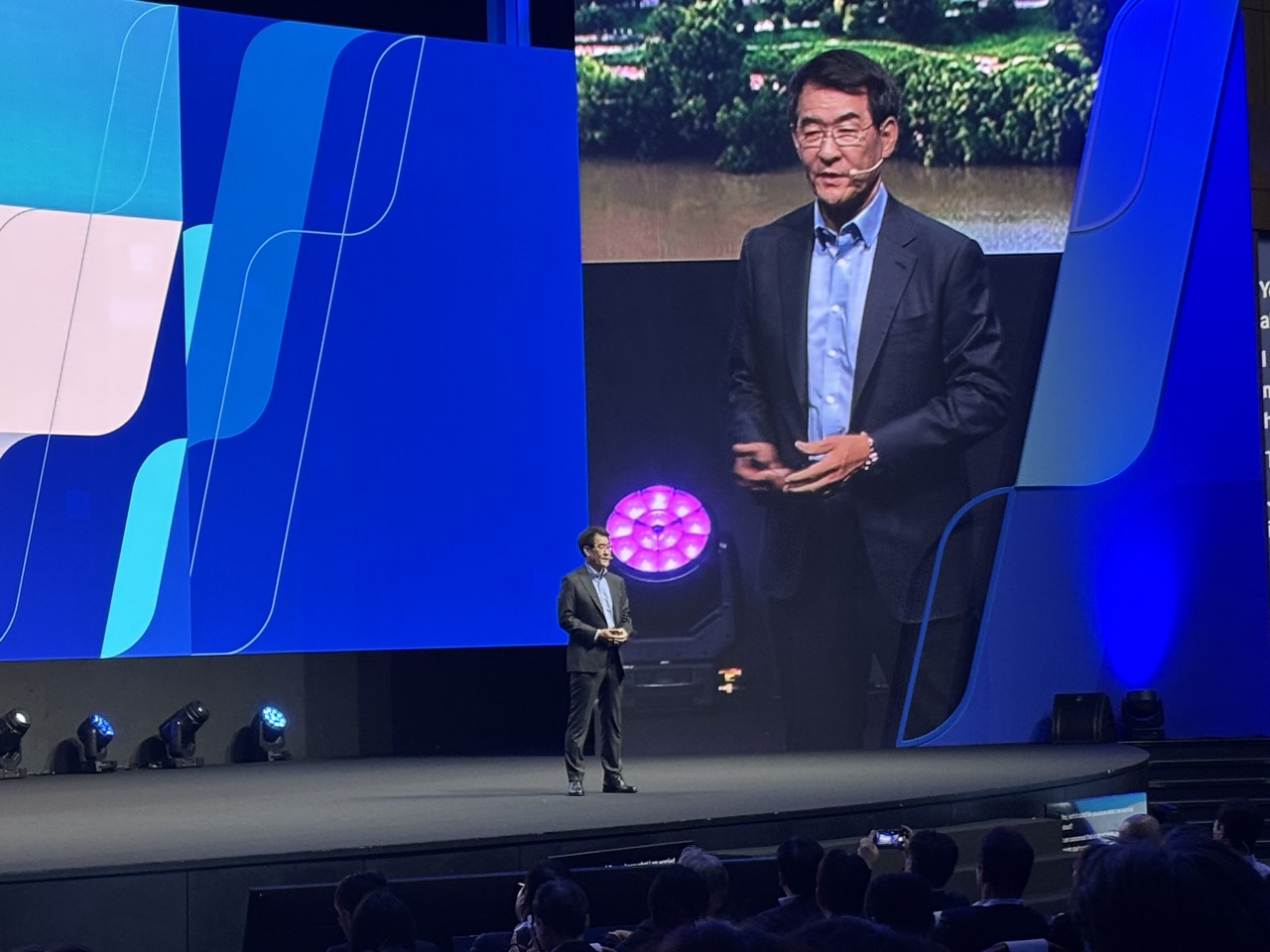
At the event, Kim Kyung-jin, chairman of Dell Technologies Korea, delivered remarks. The photo caption identified him as speaking at the event.
Kim Kyung-jin, chairman of Dell Technologies Korea, said that while 3 years ago AI was still at the introductory stage of the generative AI era, it is now essential in work and daily life. He added that the biggest challenge now is realizing the return on AI investment. He also said that AI investment must be accompanied by cost reductions and lower power consumption, and stressed that AI should be used effectively to advance work and research and development (R&D).
Dell Technologies said AI is shifting from a simple advisor to an operator capable of executing tasks on its own. As part of the corporate response challenge, the company cited a survey showing that 87% of business leaders struggle to secure the speed needed to respond to technological change.
Another survey found that 73% of business leaders want security and cyber resilience built in from the initial design stage. Dell Technologies presented these response challenges in the context of a shift in AI use from assistance to autonomous execution.
Against this backdrop, Matt Dunfee, senior vice president at Dell Technologies, presented a 5-stage AI agent framework with a step-by-step expansion structure. He said the Level 1 productivity agent supports email writing and summarization, the Level 2 Hygiene agent autonomously automates data curation and cleansing, the Level 3 coordination agent helps hand off work between departments and prevents data silos, the Level 4 expert agent handles end-to-end autonomous processing of business transactions such as purchasing and upgrades, and the Level 5 concierge agent orchestrates dozens or several thousand subordinate agents.
Matt Dunfee, senior vice president at Dell Technologies, said AI adoption should go beyond simply using models and instead redesign 20 to 30 years of entrenched legacy processes into high-value work centered on AI agents. He also emphasized the urgency of change management within organizations. The photo was taken by Kwon Young-seok.
Dunfee said that while the cost per token is falling, overall usage could surge as multi-agent operations and multimodal analysis expand. He described this phenomenon as the paradox of Tokenomics. As an example scenario, he pointed to road safety video analysis and said the scenario would consume about 300 million tokens.
In response to this cost burden, Dunfee proposed using Dell infrastructure-based on-premises environments instead of externally hosted large language models. As an example of a model optimized for on-premises operation, he mentioned Nemotron. He said this approach could cut costs by up to 10x.
Dell is pursuing a flexible hybrid infrastructure strategy that spans everything from desktops where data resides to liquid-cooled hyperscale racks. At the same time, it is also pushing ahead with Dell AI Factory as a platform. Dell AI Factory has more than 5,000 customer references.
Dunfee said the value of AI and agents lies not in adding AI to existing work, but in fundamentally redesigning how work is done. Through this, he said, Dell aims to reduce the burden of repetitive tasks for employees and help them focus on core, high-value work.
He added that Dell will actively support innovation in hybrid AI infrastructure. By presenting AI adoption as a way to change the structure of work itself, he emphasized the company's commitment to supporting the related infrastructure.
At the event, Choo Young-pyo, vice president at SK hynix, also took the stage and said that in the era of Agentic AI, memory that accumulates model weights and conversation context, known as KV cache, is emerging as the core of intelligence. He proposed 3D-stacked memory and liquid-cooling collaboration measures to overcome the Shoreline problem, a limitation of chip planar interfaces, and also shared a CXL-based memory pooling architecture to address GPU idle bottlenecks that arise when Prefill and Decode operations are separated.
Choo said SK hynix's goal is to become a full-stack memory creator, adding that the company is pushing to build an ecosystem together with partners rather than moving forward alone. He said that as evidence, SK hynix has maintained a long-standing strategic partnership with Dell Technologies, and added that it plans to continue close cooperation with Dell Technologies from next-generation AI infrastructure research and development through commercialization.
Source: IT DAILY · Kwon Young-seok
Original: https://www.itdaily.kr/news/articleView.html?idxno=241192
References
This article was produced with the help of an automated content generation algorithm.
Source: IT DAILY
View originalThis article was summarized and organized by BizCrush based on the original article from IT DAILY. For exact quotations and full details, please refer to the original article.