KTNF Accelerates Development of Micro Data Center Based on Domestic AI Semiconductors
IT DAILY ·
✦ AI Summary
KTNF is moving ahead with the development of a micro data center (MDC) for real-time data processing in edge environments, beyond cloud-centered AI infrastructure.
KTNF is participating in the Ministry of Science and ICT's "micro data center (MDC) spread project based on domestic AI semiconductors," carrying out phase 1 smart rack hardware prototype development and phase 2 validation in real-world environments.
The MDC KTNF is developing integrates NPU servers, GPU servers, network switches, power equipment and cooling equipment into a single rack, manages heat with both DLC and RDC, and plans to build a monitoring system for the entire infrastructure.
Domestic server company KTNF is pushing ahead with the development of a "micro data center" (MDC) to support real-time data processing in edge environments, beyond cloud-centered AI infrastructure. An MDC is a compact data center that places computing resources in a specific space or on-site without large-scale data center facilities.
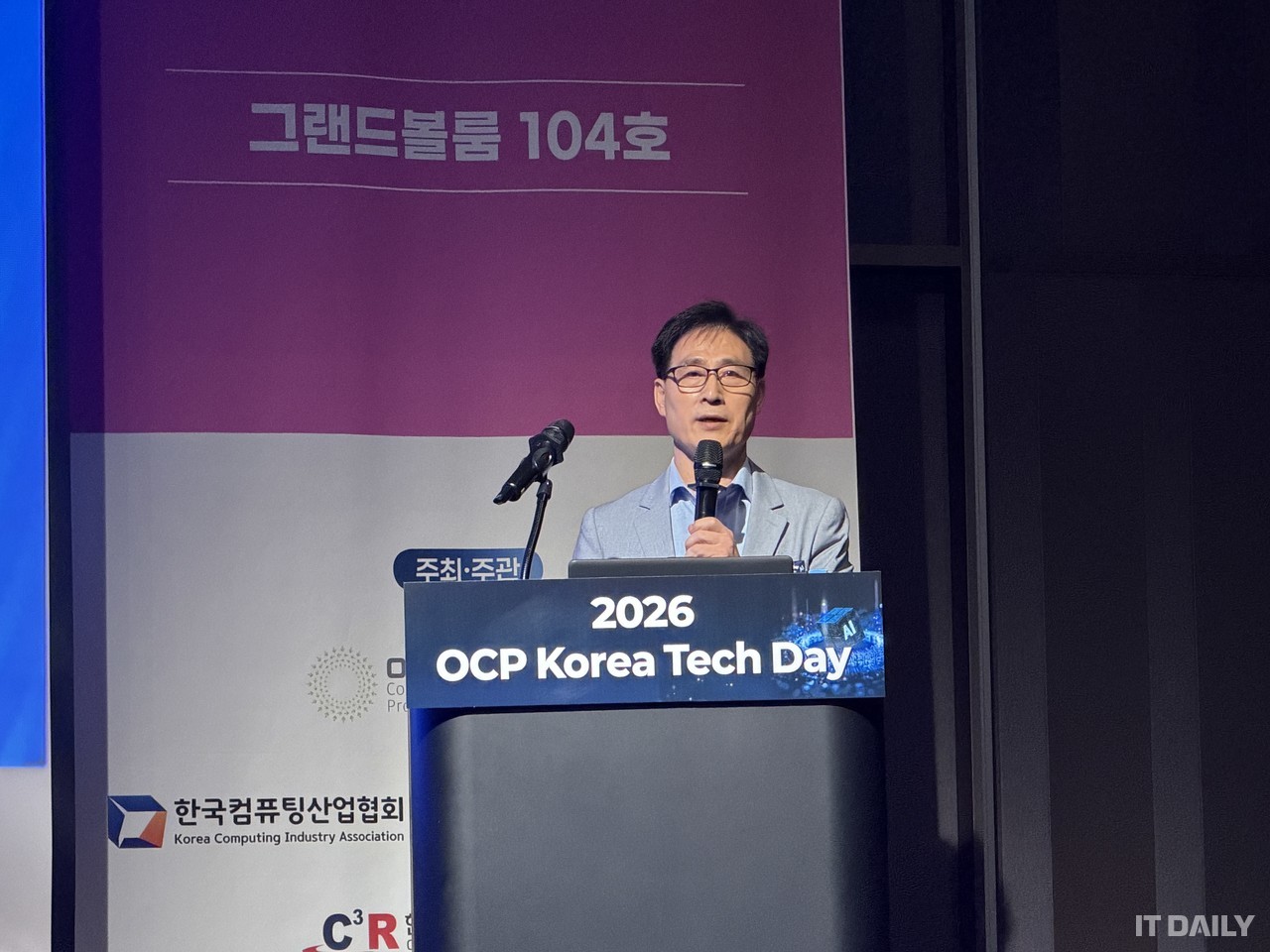
On the 21st, KTNF Executive Director Lee In-gu took the stage at the "2026 OCP Korea Tech Day." His presentation was titled "AI Data Center Infrastructure."
In his presentation, Lee In-gu explained the concept of an MDC and then introduced the current status of a government project related to the development of an MDC based on domestic AI semiconductors.
Lee said edge environments enable real-time data collection and processing and also have security advantages. He explained that the value of edge infrastructure has recently come into focus, and that micro data centers are drawing attention amid this trend.
KTNF is participating in the Ministry of Science and ICT's "micro data center (MDC) spread project based on domestic AI semiconductors." The first phase of the project is the development of a smart rack hardware prototype, while the second phase is validation in real-world environments.
The MDC KTNF is developing has a structure that integrates NPU servers, GPU servers, network switches, power equipment and cooling equipment into a single rack. Its cooling system uses a hybrid structure combining air cooling and water cooling.
General data center servers are not operated using 100% water cooling alone. Accordingly, KTNF proposed simultaneously applying direct liquid cooling (DLC) and rear-door cooling (RDC) to effectively manage the heat generated by high-density AI servers and to respond to a variety of environments.
The DLC method directly supplies coolant to remove heat from the areas inside servers where heat is generated. The RDC method cools hot air discharged from servers using a rear rack heat exchanger.
KTNF's MDC is not limited to integrating servers and cooling equipment into a single rack. KTNF plans to build a monitoring system for integrated management of the entire infrastructure, enabling users to check the server configuration inside the rack, the network equipment configuration inside the rack, the operating status of each resource, power usage and cooling status.
This was introduced at the KTNF booth on site at the "2026 OCP Korea Tech Day." Photo credit: Reporter Sung Won-young.
Lee proposed a hardware architecture to expand the use of domestic AI semiconductors in data centers. He noted that many current AI accelerators are configured in card form, and said the key point was that in large-scale data centers, socket-type or UBB-based architectures may be more advantageous in terms of compatibility and scalability.
When socket type is applied, the number of GPUs that can be installed in one rack decreases compared with a standard configuration. Compared with the usual 64 GPUs per rack, a socket-type configuration allows up to 56 GPUs per rack.
Under these conditions, KTNF said UBB-based architecture is important for accommodating a wide range of AI semiconductors. UBB (Universal Baseboard) is a standard board (mainboard) for combining multiple modules such as AI accelerators and GPUs, and it supports power delivery and high-speed data connections.
Lee said the use of both GPUs and NPUs is highly likely in hyperscale data centers. He added that an accelerator-agnostic architecture is needed, and that the goal of such an architecture is to improve operational efficiency and scalability at the same time.
Source: IT DAILY · Sung Won-young
Original: https://www.itdaily.kr/news/articleView.html?idxno=241137
References
This article was produced with the help of an automated content generation algorithm.
Source: IT DAILY
View originalThis article was summarized and organized by BizCrush based on the original article from IT DAILY. For exact quotations and full details, please refer to the original article.