75% of Earth's Land Has Become Permanently Drier Over the Past 30 Years...A World Drying Out as Desertification Spreads
IT DAILY ·
✦ AI Summary
Over the past 30 years, about 75% of Earth's land has undergone permanent drying, and 2 billion people live in arid areas.
The drivers of drying and desertification include climate change, deforestation, overgrazing, and unsustainable agriculture.
WEF said desertification is a global ecological, economic, and social risk, and that land restoration and sustainable management are needed.
Over the past 30 years, about 75% of Earth's land has undergone permanent drying, and 2 billion people are living in arid areas where desertification is advancing. The factors accelerating drying and desertification include climate change, deforestation, overgrazing, and unsustainable agriculture.
These factors are deepening land degradation as a result of desertification, and the threat is spreading to biodiversity, food supplies, water supplies, and human health. The World Economic Forum (WEF) recently released a report titled "What Is Desertification and Why Do We Need to Understand It?" and pointed out that desertification is not a problem limited to specific desert regions.
WEF described desertification as a global ecological, economic, and social risk, and the UN has projected that if the current pace continues, about 50 million people could lose their homes and be forced to migrate over the next 10 years. A summary of the WEF report was posted on the organization's official website.
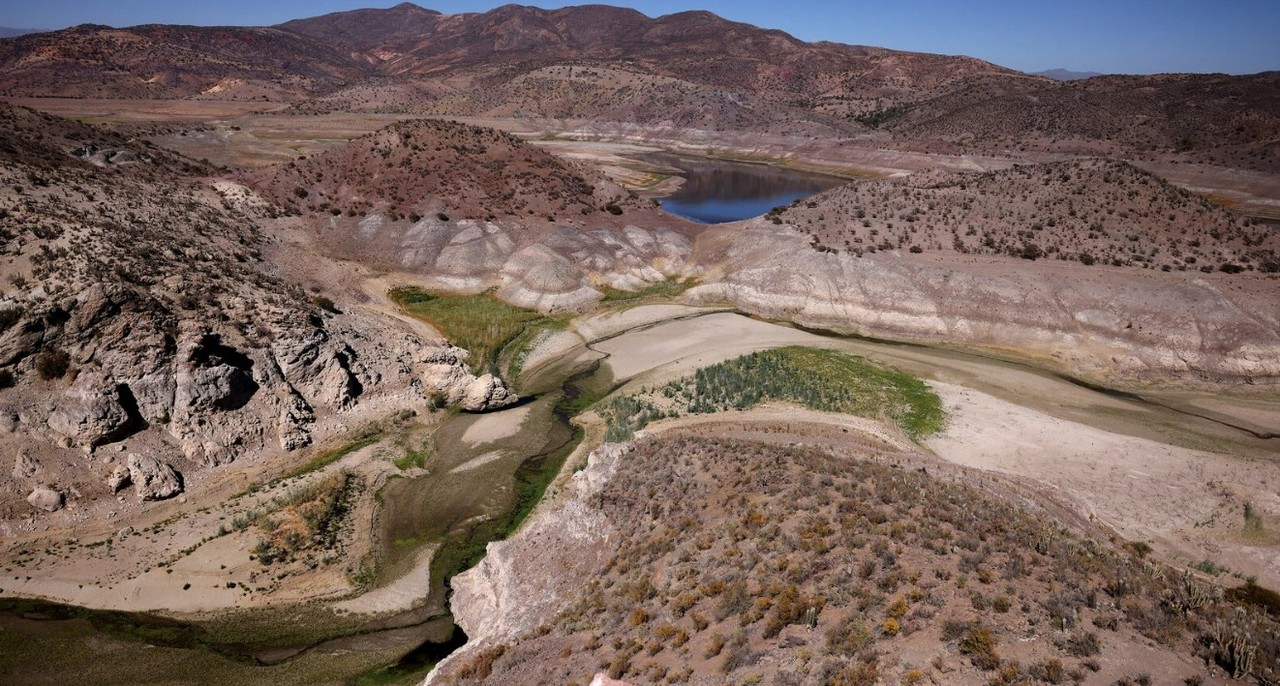
Desertification does not simply mean the expansion of deserts. It refers to the ongoing degradation of land in arid regions, resulting in the loss of productivity, reduced soil, reduced water resources, reduced vegetation, and reduced biodiversity.
The main drivers of desertification are climate change and human activity. Human factors include deforestation, overgrazing, and unsustainable farming practices, all of which weaken land resilience.
Climate factors include rising temperatures and worsening drought caused by climate change. Higher temperatures and more severe droughts in turn exacerbate desertification.
UNCCD said that the equivalent of 4 football fields of healthy, productive land is being degraded every second, and that the annual area of land degradation is about 1 million square kilometers. Droughts are increasing in both frequency and intensity. About 75% of the world's population is expected to be affected by drought by 2050, and more than 2 billion people currently live in arid regions that are most vulnerable to desertification. That figure could double by 2100, according to analysis.
Regions where the damage from desertification is especially pronounced include Africa, Central Asia, and China. Africa is considered the area most heavily affected by desertification, with about two-thirds of the continent classified as desert or arid land. In particular, the Sahel region, stretching from Senegal to Niger, Mali, Chad, and Sudan, is undergoing rapid desertification, with about 400 million residents and more than 80% of land analyzed as degraded.
Central Asia is also a region where land degradation is advancing rapidly and has been identified as vulnerable to climate change. The World Bank said that arid areas in Central Asia are especially vulnerable to climate change.
In China, desertification is severe, mainly in the north, northeast, and northwest. In addition, parts of China and Central Asia have long been classified as desert climates, and as desertification continues, climate and ecosystem changes are also intensifying.
In mountainous regions, declining snowfall is leading to the gradual disappearance of glaciers. As a result, the impact on water supplies is growing, and threats to securing drinking water and irrigation water are both emerging.
Mongolia is cited as a representative case, with estimates that about 77% of its territory has been degraded. Mongolia is also the host country for the 17th Conference of the Parties to the UN Convention to Combat Desertification (UNCCD COP17) in 2026.
These trends are not limited to Mongolia. More than 30% of the U.S. landmass is affected by desertification, while about one-quarter of land in Latin America and the Caribbean is classified as desert or arid land. The European Union (EU) also has about 12% of its total territory affected by desertification, and according to EU classifications, more than 1 million square kilometers fall into high-risk desertification areas. Among them, Spain, Cyprus, and Greece are identified as countries at high risk of desertification.
Desertification directly threatens the livelihoods of local residents in the places where damage occurs. According to UNCCD, the homes of about 500 million people are already located in areas where desertification is underway. Declining land productivity leads to deeper poverty, and residents are exposed to food shortages, malnutrition, and a lack of clean drinking water. Vulnerability to climate change, drought, and natural disasters is also increasing.
These changes lead to lower productivity in primary industries dependent on land, such as agriculture and livestock farming, ultimately undermining local livelihoods. If resources become scarce, competition over limited resources is likely to intensify. This could trigger social unrest and may, in turn, lead to conflict. As a result, it can become a factor that drives forced displacement.
The report highlighted the Aralkum Desert in Central Asia as a representative example. Until the 1960s, the Aral Sea existed in this region, and it was the world's fourth-largest lake. However, during the Soviet era, water from the Aral Sea was diverted for large-scale irrigation to grow cotton in arid areas, causing the water level to drop sharply. Climate change was later added to the mix.
As a result, the Aral Sea shrank to about one-tenth of its former size, and only a small, highly saline lake remains today. The exposed lakebed has turned into a salt desert. This destroyed the livelihoods of residents who had depended on fishing. Fishing boats left on the lake remain abandoned, rusting away.
As desertification has worsened, various projects have been promoted around the world to prevent and restore degraded land. The main response measures are forest restoration and afforestation, using trees and shrubs planted on degraded land. These efforts are expected to help restore soil and conserve moisture.
As an example of this response, Uzbekistan is carrying out a greening project across about 1 million hectares around the Aral Desert. The target species are trees and shrubs, and drought-resistant saxaul is being used as a key species. Saxaul is a shrub whose roots can penetrate more than dozens of meters underground in search of water.
Uzbekistan is using saxaul to stabilize salt and sand. As a result, saxaul is helping block the inland movement of salt and sand caused by sandstorms.
In the African Sahel and Sahara regions, the Great Green Wall, a flagship international project led by the AU, is being promoted. The project began in 2007 and involves 22 African countries. Its goal is to restore 100 million hectares of degraded land by 2030, while also storing more than 250 million tons of carbon and creating about 10 million jobs.
As a practical response to desertification and land degradation, sustainable land management is being presented as a leading approach. Combining forestry and agriculture is a method that raises both productivity and ecological resilience, while sustainable grazing is also cited as a way to improve both productivity and ecological resilience.
Water management is an important factor. Rainwater harvesting is a way to address water shortages, and drip irrigation is another. Growing drought-resistant crops is also being presented as a response to water scarcity.
Ecosystem restoration is also presented as a way to prevent land degradation. Restoring damaged vegetation is one method, and wetland restoration is another. Restoring natural ecosystems such as rivers is also mentioned as a way to prevent land degradation.
These issues are also extending into the international agenda. 2026 is expected to be an important turning point in responding to desertification, and UNCCD COP17 will be held in Mongolia in late August 2026. The theme of COP17 is "Restoring Land, Restoring Hope," and international responses to the combined challenges of land degradation, desertification, and drought will be discussed.
A WEF report estimated that global economic losses related to land degradation, desertification, and drought reach about USD 878 billion annually. The report said the scope of desertification's impact extends beyond the environment to corporate supply chains, investment, and raw material sourcing, and it noted that the importance of the private sector in responding to desertification is therefore growing.
The report then relayed expert views that desertification cannot be solved by approaching it as a mere environmental issue. It also explained that land degradation is linked to agricultural productivity, food security, water resources, energy, supply chains, regional economies, and population movement. It further noted that the essence of desertification is not the expansion of deserts itself, but the rapid decline of available land, water, food, and ecosystem foundations.
In this context, WEF said that responding to desertification is not limited to land restoration. WEF defined it as both a biodiversity protection challenge and a task for improving resilience to climate change, and said it is a key issue underpinning sustainable economic growth.
Source: IT DAILY · Jo Min-soo
Original: https://www.itdaily.kr/news/articleView.html?idxno=241134
References
This article was produced with the help of an automated content generation algorithm.
Source: IT DAILY
View originalThis article was summarized and organized by BizCrush based on the original article from IT DAILY. For exact quotations and full details, please refer to the original article.