KT Targets Enterprise AX With Domestic NPU-and-LLM Integrated Platform
IT DAILY ·
✦ AI Summary
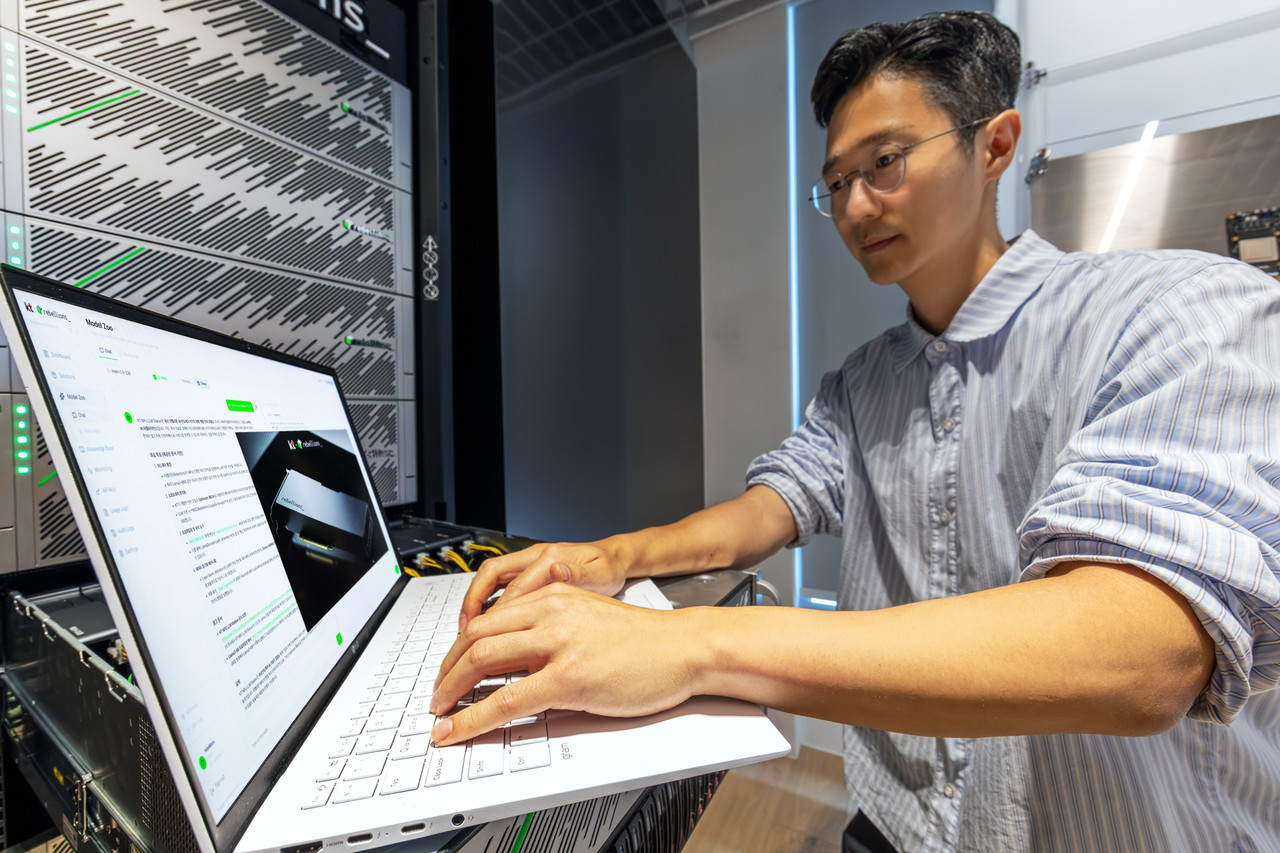
KT on the 19th launched its enterprise sovereign AI appliance, the "KT NPU LLM Station (Station)."
The product integrates Rebellions NPU "ATOM-MAX" and KT's "Mi-dum K 2.5 Pro (Pro)" in a single server, and also includes an operating API platform.
KT said it targets regulated industries such as public services, defense, pharmaceuticals, manufacturing, and finance by applying an on-premises installation model, on-premises data processing, and on-premises AI computation.
KT on the 19th launched its enterprise sovereign AI appliance, the "KT NPU LLM Station (Station)." An appliance refers to a finished device that combines hardware and software. KT has introduced an integrated product that bundles domestic AI semiconductors and a domestic language model into a single server.
The "KT NPU LLM Station (Station)" is a configuration that integrates a domestic AI semiconductor and a domestic language model in a single server. The onboard semiconductor is Rebellions NPU, "ATOM-MAX."
The onboard LLM is "Mi-dum K 2.5 Pro (Pro)," independently developed by KT. The product also comes with an operating API platform and other features.
The product is designed around domestic technologies for core technologies in AI semiconductors, models, and operating platforms, and is seen as enabling immediate deployment in enterprise settings in line with the government's sovereign AI policy direction. KT cited security as a core element of the product and applied an on-premises installation model for customers, along with on-premises processing of all data and all AI computations.
Accordingly, the product targets industries where regulations such as network separation and strong security requirements have made it difficult to adopt overseas generative AI, and it is aimed at regulated sectors such as public services, defense, pharmaceuticals, manufacturing, and finance. The structure is notable for being designed for environments with high security requirements.
It also seeks to reduce adoption burdens by eliminating the need for a separate implementation process, and AI functions such as document-based question answering (RAG) can be used immediately from the day of installation. KT explained that it uses an inference-focused NPU, offers better power efficiency than GPU servers in the same class, and provides industry-standard APIs, adding that existing AI services can be used compatibly without code changes by changing only the connection information. Going forward, it plans to expand into edge data centers (Edge DC) for physical AI in areas of use.
KT plans to sequentially apply the AI agents it has developed, including the work automation agent "K-Claw" (tentative name), as part of that process. KT also plans to work with specialized AI agent developers and expand the scope of application into customer-tailored deployment projects.
Source: IT DAILY · Seong Won-young
Original: https://www.itdaily.kr/news/articleView.html?idxno=241076
References
This article was produced with the help of an automated content generation algorithm.
Source: IT DAILY
View originalThis article was summarized and organized by BizCrush based on the original article from IT DAILY. For exact quotations and full details, please refer to the original article.