LG Uplus, Yonsei University Verify AI-RAN Network Handover Technology, Confirm Service Continuity
IT DAILY ·
✦ AI Summary
LG Uplus and Yonsei University verified technology that maintains connectivity during network handovers in an AI-RAN environment.
The verification was conducted by linking LG Uplus's 5G network with Yonsei University's in-house developed Nvidia GPU-based AI-RAN test network.
The verification confirmed that the terminal could automatically select the optimal network in response to changes in the wireless environment and maintain a stable connection.
LG Uplus and Yonsei University have verified technology that maintains connectivity during network handovers in an AI-RAN environment. LG Uplus announced the verification results on the 19th.
AI-RAN stands for AI Radio Access Network. It is a next-generation wireless network technology that analyzes and optimizes network conditions in real time.
Physical AI technologies have recently been drawing attention. Physical AI is characterized by moving and performing tasks in physical space based on perception and judgment of the surrounding environment. Representative examples include autonomous work robots and drones that use AI.
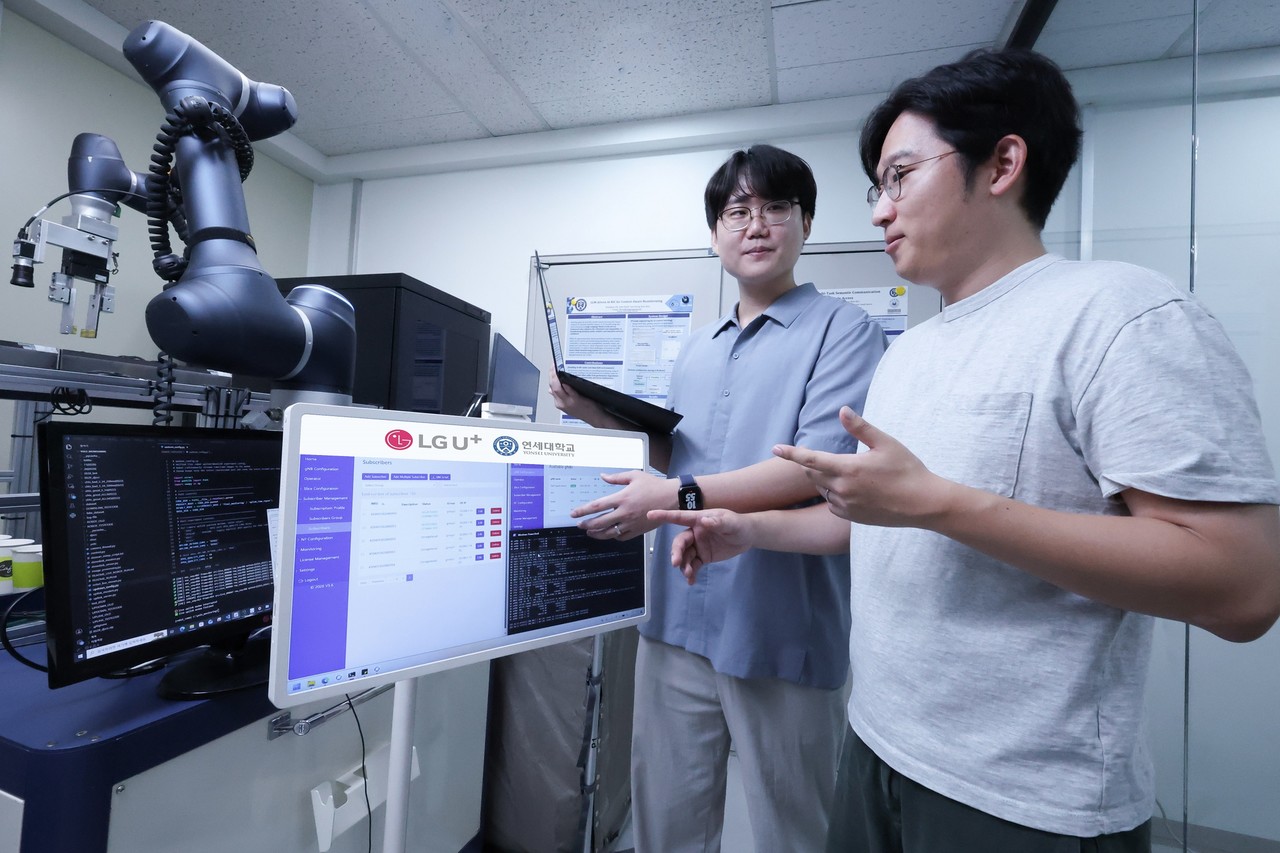
These devices need to use different networks when they move out of specific spaces such as factories and logistics centers. Accordingly, there is a growing need for technology that can maintain stable connectivity even when networks change during movement. The photo shows LG Uplus employees and Yonsei University researchers introducing network handover technology.
AI-RAN is being watched as one of the core network technologies for the 6G era because it can predict the possibility of communication quality degradation in advance and efficiently use network resources depending on conditions.
The verification was conducted by linking LG Uplus's 5G network with Yonsei University's in-house developed Nvidia GPU-based AI-RAN test network. The two sides implemented scenarios in which physical AI devices such as robots and drones left the AI-RAN test network and moved to the 5G network, as well as scenarios in which physical AI devices moved from the 5G network into the AI-RAN test network.
The verification confirmed that the terminal could automatically select the optimal network in response to changes in the wireless environment and maintain a stable connection. The terminal used in the verification was PM95 from Point Mobile, an industrial mobile device specialist.
LG Uplus will use this demonstration as an opportunity to support the development of a domestic AI-RAN ecosystem. LG Uplus and Yonsei University will provide a testing and verification environment for AI-RAN-related technologies to domestic small and medium-sized companies, and will also support the use of that environment as a testbed for overseas expansion.
LG Uplus and Yonsei University plan to continue verifying AI-RAN technology while expanding the scope of their collaboration beyond AI-RAN technology verification, and based on that, they also plan to continue joint research on network technologies needed for next-generation AI-based services.
Source: IT DAILY · Seong Won-young
Original: https://www.itdaily.kr/news/articleView.html?idxno=241075
References
This article was produced with the help of an automated content generation algorithm.
Source: IT DAILY
View originalThis article was summarized and organized by BizCrush based on the original article from IT DAILY. For exact quotations and full details, please refer to the original article.