SKT's A.X K2 Advances to 2nd Round of Core Model Project, Citing Real-World Deployment Experience
IT DAILY ·
✦ AI Summary
SK Telecom's elite team passed the government's second evaluation for the independent AI foundation model project.
SK Telecom submitted A.X K2 and was included among the organizations advancing to the next stage.
A.X K2 is larger than A.X K1 and was presented as featuring strengthened long-context understanding and agent capabilities.
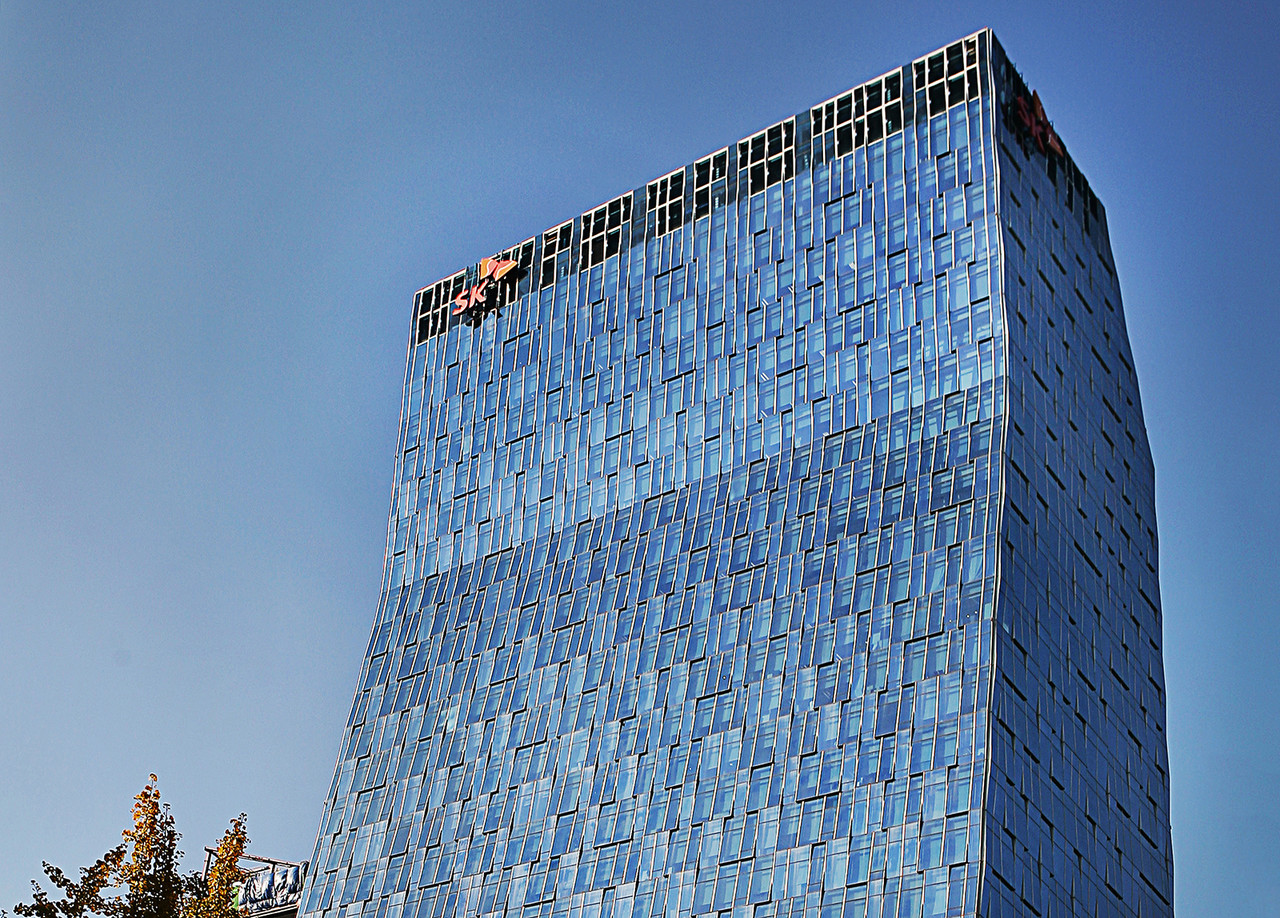
A view of SK Telecom's Euljiro headquarters (Photo: SKT). SK Telecom's elite team has passed the government's second evaluation for its independent AI foundation model project. On the 18th, the Ministry of Science and ICT released the results of the second-stage evaluation for the independent AI foundation model development project.
In the government's second evaluation for the independent AI foundation model development project, SK Telecom submitted "A.X K2" and was included among the organizations advancing to the next stage. The organizations advancing are LG AI Research, SK Telecom, and Upstage.
In this evaluation, usability and practicality stood out based on the performance of in-house AI models and experience applying them in real services and industrial settings. The organization that was eliminated was Motif Technologies.
The model submitted by SKT's elite team, A.X K2, has 688 billion parameters (688B). Its previous model was A.X K1, which had 519 billion parameters (519B).
A.X K2 has been expanded in scale compared with A.X K1. Another feature of A.X K2 is improved long-context understanding and agent capabilities.
A.X K2 passed the second evaluation, and its average performance across 14 domestic and international benchmarks improved by 32.2 percentage points compared with the previous model, A.X K1. In long-context understanding and agent-related evaluations, performance improved by about 83.9 percentage points. Kim Tae-yoon, who is in charge of SKT's foundation model, explained these performance gains in an interview with the SKT Newsroom.
Kim Tae-yoon said the score on the ultra-difficult math benchmark Apex rose from 1.0 for A.X K1 to 45.8 for A.X K2. He also cited 80.5 on the Korean knowledge benchmark KMMLU-Pro and 91.6 on the Korean culture comprehension benchmark CLIcK.
At the same time, all independent AI models from four elite teams, including SKT's team, were listed by the U.S. AI research institute Epoch AI as "notable AI models." In the global comprehensive AI model performance index AAII (Artificial Analysis Intelligence Index), all four elite team models scored above 31 points.
In this evaluation, the review covered not only performance but also whether the models could be put to use in real-world settings, and SKT's elite team was highlighted for its numerical reasoning capabilities and usability in actual services and industrial sites. The expert committee said SKT's elite team secured top-tier comparative performance in numerical reasoning and Korean-language areas.
The expert committee also said SKT's elite team had an edge in usability and practicality based on a record of being actually deployed in large-scale commercial services. While the evaluation examined practical applicability along with performance, those strengths were confirmed.
SKT is focusing on building various use cases based on its in-house AI models. Through cooperation between SKT and the Ministry of National Defense, three quantized models based on A.X K1 were developed, and SKT plans to apply A.X K2 within the second half of this year.
The quantization function helps reduce the model's memory usage and processing burden. As a result, it helps support stable operation even in resource-constrained environments.
In manufacturing sites, A.X K2 has been partially applied at KG Steel and Connec, and a manufacturing-specialized AI agent demo version is scheduled to be applied in the second half of this year. The application targets are the cold rolling line at KG Steel's Dangjin plant and Connec's casting and processing processes for field validation. KG Steel is a steel manufacturer and galvanized steel sheet producer, while Connec is an auto parts manufacturer.
A lightweight version of A.X K2 is being applied in everyday life to SKT AI call agent Adot services. The "AI suggestion" feature in Adot Phone extracts schedules and to-dos based on call content and supports follow-up actions by users. A lightweight version of A.X K2 was also partially applied in the technical design for organizing records in Adot's "Note" feature by purpose.
An SKT official said the company focused on expanding usability while simultaneously increasing the model's scale and performance compared with the previous version. The official added that, as a real-world application example, SK Biopharm applied AI to the development of targeted therapies for intractable cancers, cutting the typical early-stage new drug development period from 1 to 2 years to 5 months.
The SKT official said such real-world application cases do exist, and that experts are also evaluating them positively in terms of usability.
SKT's elite team did not stop at advancing model performance, but also worked to promote applications across various industries and services. In addition, through collaboration with consortium participants, it also worked to strengthen the foundations for AI model use, including data quality enhancement and reliability.
Riner, which participated in this process, is a company specializing in AI search and information discovery agent technology and a participant in SKT's elite team. Riner took part in this second evaluation.
Riner provided a dataset based on actual usage, built an accuracy evaluation system based on a Ranker model, and designed a sentence-level reliability verification module. Through this, it focused on minimizing AI Hallucination.
A Riner official said the company intends to contribute to improving the model's accuracy and reliability in the future, and also expressed its intention to apply AI technology specialized for research and academic fields to a national-scale project. The official also said Riner aims to contribute to building a "trustworthy AI" ecosystem.
SelectStar participated in SKT's elite team, oversaw the data segment of the elite team, carried out training data quality management to improve model performance, and established a verification system for training data.
SelectStar plans to push for data advancement in the next stage based on the results of AI model expansion into industry and everyday life. Based on that, it also intends to expand data advancement together with a systematic verification of model safety and reliability. Kim Se-yup, CEO of SelectStar, said the company plans to stably support model advancement based on its data construction and quality management capabilities, and said it will continue improving data and reliability assessment technologies so that the technical and data achievements from this project do not remain limited to specific companies but instead become outcomes broadly used across Korea's AI ecosystem.
SKT said it has passed this second evaluation and emphasized the significance by linking it to participation in the next stage. SKT said this achievement was made possible by the efforts of the consortium's participating companies and institutions, and it plans to focus on creating outputs that Korea's AI ecosystem can share based on the industrial and everyday-life expansion of its in-house AI models.
Source: IT DAILY · Seong Won-young
Original: https://www.itdaily.kr/news/articleView.html?idxno=241052
References
This article was produced with the help of an automated content generation algorithm.
Source: IT DAILY
View originalThis article was summarized and organized by BizCrush based on the original article from IT DAILY. For exact quotations and full details, please refer to the original article.