U.S. stablecoins are moving fast — what is Korea doing? Industry calls for regulatory framework
TECHWORLD ·
✦ AI Summary
As global stablecoin regulation and the shift to on-chain finance accelerate, calls are growing in Korea for regulatory action and the closing of gaps.
At a seminar hosted by the Korea Fintech Industry Association, participants discussed the Senate failure of the U.S. Clarity Act, the SEC's innovation exemption, the Genius Act's implementation, and Treasury rulemaking.
In Korea, where actual demand such as stablecoin trade payments has already emerged, speakers argued that a regulatory sandbox and more concrete legislation are needed.
As stablecoin regulation is accelerating around the world and the shift to on-chain finance is also progressing quickly, calls are growing for Korea to put related rules in place as soon as possible. The industry is urging regulatory action, and concerns were also raised that Korea is moving too slowly compared with developments overseas.
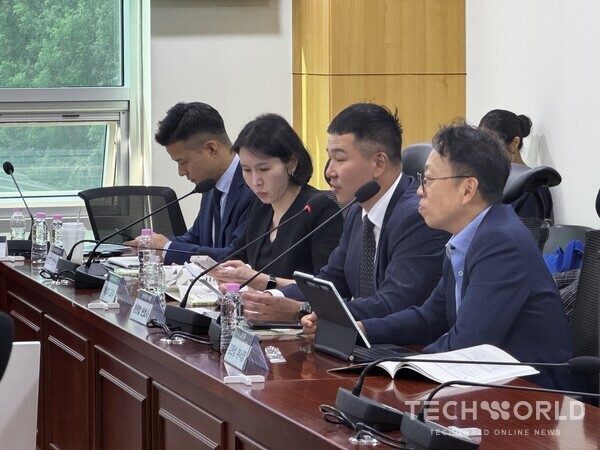
Against that backdrop, the Korea Fintech Industry Association held a seminar on the 28th. Titled "The Future of Finance on Blockchain: The Global Shift to On-Chain Finance and Korea's Choice," the seminar focused on the current state of U.S. digital asset regulation and policy tasks for Korea's transition to on-chain finance.
The seminar also reviewed the fact that the Clarity Act, a market structure bill aimed at establishing an overall regulatory framework for the U.S. digital asset market, has not been finalized. Miller Whitehouse-Levine, head of the Soluna Policy Institute, said the Clarity Act failed to pass the Senate after it did not secure 60 votes in a procedural vote on the Senate floor on the 15th. Ethical issues were raised in the process, and political differences over stablecoin rewards were also cited, leading to the view that prompt passage of the market structure bill will likely face difficulties.
In Korea, it was argued that actual demand, such as payments for trade using stablecoins, has already emerged, so the regulatory vacuum before legalization must be resolved first. As an initial tool for that, the use of regulatory sandboxes was suggested, and it was also argued that the regulatory gap must be filled even before legislative work is completed as the shift to on-chain finance accelerates.
It was explained that digital asset legislation has not been halted. According to his explanation, federal regulators are moving to provide the legal certainty envisioned by the Clarity Act within the scope of their current authority. According to his remarks, the Clarity Act failed to pass the Senate.
As an example of this trend, the SEC's action was cited. On the 17th, the SEC announced an innovation exemption. The innovation exemption allows tokenization and on-chain trading of U.S. listed stocks on trading platforms that meet certain requirements.
This innovation exemption is temporary and conditional in nature. For tokenized securities trading platforms, it temporarily exempts them from the definition of an exchange, and it also includes an exemption from the definition of a dealer for liquidity providers that meet certain requirements.
In addition, the Genius Act will take effect on January 18 next year. Last August, the U.S. Treasury Department released a draft implementation rule related to the issuance, provision, and sale of stablecoins, began collecting public comments on the draft, and is also carrying out follow-up work. He predicted that rule revisions will continue and said that U.S. digital asset rulemaking will continue not only through Congress but also through regulators.
In Korea, the need to establish rules for KRW stablecoins and digital assets has continued to be raised, but criticism of the pace of concrete legislation has also persisted. In this situation, demand for stablecoin use is already emerging in the industry, leading to the view that simply waiting for the enactment of a basic digital asset law is not enough.
Attorney Hwang Hyeon-il of Sejong participated in the discussion. Hwang said that for securities transactions conducted on-chain, discussion is needed on the point at which rights are finalized, and that discussion is also needed on the legal nature of using such securities as collateral.
Hwang said the discussion must go beyond social discourse and develop into a concrete stage. He emphasized identifying detailed legal issues for actual market operation.
Seo Byeong-hoon, chairman of the Stablecoin Council, pointed to the practical problem of the regulatory vacuum. Seo argued that the problems arising from that vacuum should be addressed first, and noted that while there is demand from overseas companies for stablecoin trade payment to Korean exporters, institutional difficulties remain in the process by which Korean companies receive and cash out stablecoins.
He explained that under current law, when trade payments are made in stablecoins overseas, there is no means to receive them in Korea. He also said that regarding the opening of exchange accounts by domestic for-profit corporations, only guidelines exist, and the gap created by the absence of related legislation continues.
He said alternatives such as a regulatory sandbox are possible even without a basic digital asset law. He added that the task at hand is to seek practical solutions.
Source: TECHWORLD · Kim Hye-jin
Original: https://www.epnc.co.kr/news/articleView.html?idxno=407443
References
This article was produced with the help of an automated content generation algorithm.
Source: TECHWORLD
View originalThis article was summarized and organized by BizCrush based on the original article from TECHWORLD. For exact quotations and full details, please refer to the original article.