Japan in Talks to Invest KRW 26 Trillion in U.S. Chip Plant; Will GF Operate It?
TECHWORLD ·
✦ AI Summary
The Japanese and U.S. governments are discussing the construction of a large-scale semiconductor plant in the United States as a follow-up project to their USD 550 billion investment agreement.
The project size being discussed is 2 trillion to 3 trillion yen, and GF is being considered as the plant operator.
The two sides are discussing the possibility of recovering the investment and the project structure, while the plant location, production scale, and process technology remain undecided.
The Japanese and U.S. governments are discussing the construction of a large-scale semiconductor plant in the United States as a follow-up project to their USD 550 billion investment agreement with the U.S. This discussion is drawing attention because it suggests the bilateral investment deal is taking shape as a concrete semiconductor plant project.
The Nihon Keizai Shimbun, or Nikkei, first reported the matter on the 17th. Reuters also reported that same day, citing Nikkei, that the two sides were discussing the construction of a semiconductor plant as part of the USD 550 billion investment agreement, while Taiwan's CNA also cited Nikkei in reporting that the Japanese and U.S. governments were moving ahead with talks on building the plant.
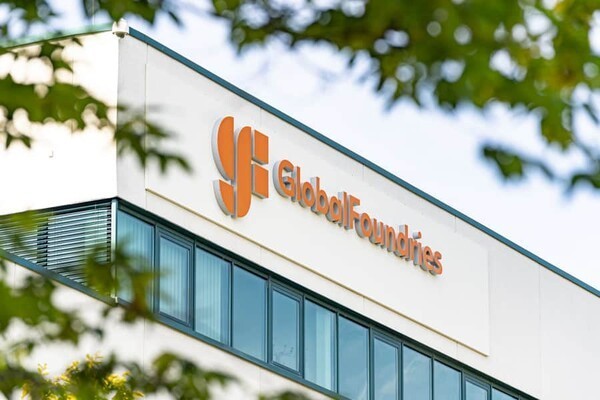
According to industry sources on the 28th, the project size being discussed is 2 trillion to 3 trillion yen, or about KRW 17.8 trillion to KRW 26.7 trillion. U.S. foundry company GlobalFoundries (GF: GlobalFoundries) is being discussed as the possible operator of the plant.
According to CNA, the Japanese government is consulting with the U.S. side on issues such as prospects for recovering its investment. Taiwan's Ministry of Economic Affairs, International Trade Administration, has officially posted related information, and the post also said working-level talks between the two countries took place on the 14th and 15th.
The project is being presented as a follow-up to Japan's USD 550 billion investment pledge to the United States. It carries the character of a subsequent project to Japan's large-scale investment plan promised to the U.S.
Examples of Japan's existing efforts to put its U.S. investment commitments into practice include energy infrastructure projects such as power plants. If an actual investment in a semiconductor plant is confirmed, it is expected to become an example of investment expanding into advanced manufacturing.
According to Nikkei, the U.S. side proposed building the semiconductor plant. In connection with this, working-level talks were held on the 14th and 15th.
The two countries are continuing discussions with issues such as the possibility of recovering the investment and the project structure on the agenda. At this stage, however, the investment amount, production process, and plant location remain undecided.
During the negotiations, the scale being discussed is 2 trillion to 3 trillion yen. GF is being mentioned as the operator, and logic semiconductors are expected to be the product manufactured.
According to Nikkei and Reuters, GF is being mentioned as a candidate to operate the new plant. GF is a global foundry company with production bases in the United States, Germany, Singapore, and elsewhere. The new plant is expected to produce logic semiconductors for applications such as data processing.
One of the main goals of the project is to secure a stable supply chain for key industrial semiconductors in the United States. The industries identified as targets for supply chain security include automobiles, aerospace, and defense.
GF differs from companies such as TSMC and Samsung Electronics, which are competing mainly around cutting-edge advanced process technology. GF's core business is mature-process semiconductors for automobiles, industrial equipment, aerospace, and defense.
The U.S. government has so far supported local advanced-process investments by TSMC and Samsung Electronics and has pushed ahead with efforts to expand production bases for Intel, Micron, and others. In comparison, analysts say this project could play a complementary role in expanding mature-process and specialty-process production capacity.
The Japanese government is reportedly seeking to use this project as an opportunity to secure a foundation for Japanese semiconductor equipment and materials companies to participate in the U.S. semiconductor supply chain. From Japan's perspective, beyond simple capital investment in the U.S., expanding opportunities for its equipment and materials companies to enter the U.S. semiconductor supply chain is seen as a major interest.
A representative option for doing this is for Japanese companies to supply products needed to operate the plant, such as semiconductor manufacturing equipment and materials. Japan is said to view the project less as a matter of capital injection itself and more as an opportunity for its equipment and materials companies to join the U.S. semiconductor supply chain.
Another proposal under discussion is supplying the semiconductors produced to Japanese automakers and other Japanese companies that have entered the United States. That supply plan is being cited as a factor that would increase economic effects.
Semiconductors are emerging as an important economic security field in Japan's investment in the United States. Japan's interest in this project is also said to be focused on expanding the entry of its companies into supply chains in this context.
However, this project is not yet a finalized investment. The two governments are currently at the stage of discussing the outlook for recovering the investment and the project structure.
In addition, specific items such as the plant location, production scale, and process technology have not yet been decided. There has been no comment on these matters.
A semiconductor industry expert said, on the premise that Japan and the United States are strengthening semiconductor cooperation centered on supply chain stability and economic security, that if the project is converted into an actual investment it would affect the semiconductor production ecosystem in the United States, and would also affect the participation of Japanese equipment and materials companies in supply chains.
Source: TECHWORLD · Park Gyu-chan
Original: https://www.epnc.co.kr/news/articleView.html?idxno=407390
References
This article was produced with the help of an automated content generation algorithm.
Source: TECHWORLD
View originalThis article was summarized and organized by BizCrush based on the original article from TECHWORLD. For exact quotations and full details, please refer to the original article.