Ministry of Trade, Industry and Energy Focuses on K-Batteries’ Sodium and All-Solid-State Tech as Private Sector Plans KRW 8 Trillion Investment
TECHWORLD ·
✦ AI Summary
The government and Korea’s battery industry have decided to include sodium batteries and all-solid-state batteries in the areas targeted for expanded technology strategy.
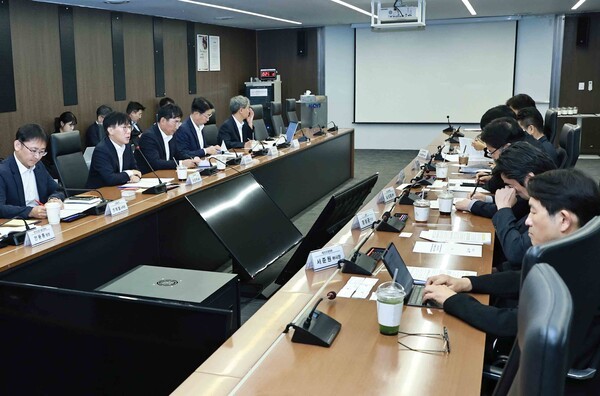
The Ministry of Trade, Industry and Energy held a meeting on the 22nd at the Korea Chamber of Commerce and Industry in Seoul and unveiled the "Battery Industry Technology Roadmap."
The government plans to establish large-scale R&D projects starting in 2027, while the private sector plans to invest about KRW 8 trillion by 2030.
The government and Korea’s battery industry are moving to broaden their technology strategy by including sodium batteries and all-solid-state batteries in the areas targeted for expanded focus, signaling an effort to move beyond a strategy centered on high-nickel ternary (NCM) batteries, which had been the main area of focus.
The move is aimed at responding to Chinese companies’ efforts to strengthen price competitiveness based on lithium iron phosphate (LFP) batteries and accelerate the commercialization of next-generation batteries. As part of a plan to reorganize its technology portfolio, the government and industry are seeking to position sodium-centered batteries in the mass-market segment and all-solid-state batteries in the high-performance segment.
Reflecting that direction, the Ministry of Trade, Industry and Energy held a meeting on the 22nd at the Korea Chamber of Commerce and Industry in Seoul and unveiled the "Battery Industry Technology Roadmap." The meeting was attended by officials from battery cell and materials companies, including LG Energy Solution, Samsung SDI and SK On, as well as related organizations, and the roadmap is built around concentrated investment in next-generation batteries, cooperation on research and development (R&D) among companies, and securing cost competitiveness.
The government plans to establish large-scale R&D projects starting in 2027 to support sodium and all-solid-state battery development and joint research among companies. The private sector plans to invest about KRW 8 trillion in process and materials innovation and domestic production by 2030.
As price competition in the global battery market intensifies, the market share of Korean companies has fallen while that of Chinese companies has risen. According to the ministry’s tally, Korean companies’ share of the global battery market fell from 31.1% in 2021 to 15.3% last year. By contrast, Chinese companies’ share rose from 55.1% to 79.4% over the same period.
The same trend was seen in the electric vehicle battery market excluding China. In the EV battery market excluding China, Korean companies’ share fell from 57.0% to 36.6%, while Chinese companies’ share rose from 16.1% to 49.9%. On top of that, slower EV growth and the expansion of the ESS market are changing the makeup of battery demand.
The ministry said the expansion of the ESS market, which prioritizes cost efficiency, is increasing the importance of mass-market batteries such as LFP. As a result, domestic companies are moving away from an NCM-centered production structure and shifting existing production lines toward securing LFP production capacity.
The government has identified sodium batteries as a next-generation mass-market technology to respond to these market changes. Compared with lithium, sodium is more abundant and less expensive, which can ease raw material supply chain burdens. The government plans to develop cell and materials technologies at the same time, including cathode materials, hard carbon anode materials and electrolytes, and to establish a domestic supply chain at an early stage.
The development targets for next-generation batteries include securing 160 Wh/kg-class sodium batteries in 2027 and completing development and entering commercialization for 220 Wh/kg-class sodium batteries in 2030. For all-solid-state batteries, the target is to secure 400 Wh/kg-class technology in 2028 and begin full-scale commercialization in 2030.
All-solid-state batteries will be pursued in connection with sectors that require high energy density. The linked sectors identified for all-solid-state batteries are high-performance electric vehicles, robots, drones and urban air mobility (UAM).
At the same time, individual research and development efforts by each company will shift in part to joint development. The three battery cell makers will cooperate in noncompetitive areas such as standards and common-use materials, while R&D tied to verification and purchasing by cell companies will be pursued for products developed by materials companies. Through this, they aim to reduce duplicate investment and build a structure that links developed materials to actual mass production.
Data cooperation between automakers and the battery industry is also included. Operating history information accumulated by electric vehicle battery management systems (BMS) will be used in battery development by automakers, cell companies and materials companies, and a system for feeding information back will be established. In addition, efforts will be made to establish evaluation procedures for sodium and all-solid-state batteries, reflect application-specific requirements for robots and drones, and secure related standards ahead of others.
To secure price competitiveness, the government is moving ahead with process and materials innovation while also seeking to introduce production tax credits to support domestic battery production. The government also plans to support used-battery recycling and the establishment of a domestic supply chain, including mineral processing.
Companies are pursuing advanced manufacturing processes such as electrode dry processing and are also developing mass-market materials such as mid-nickel and lithium manganese rich (LMR). They are also pursuing the localization of precursors, anode materials and lithium sulfide.
Separately, the roadmap includes KRW 255.4 billion in government investment and KRW 85.1 billion in private investment for the development of next-generation batteries such as sodium and all-solid-state batteries. For cooperative projects involving joint technology, commercialization, information feedback and standardization, the government will invest KRW 62 billion and the private sector KRW 22.6 billion. Private companies plan to invest a total of KRW 7.9328 trillion in R&D and facilities by 2030, focusing on domestic production, process innovation, material diversification and localization targets.
Lee Min-woo, director general of the Ministry of Trade, Industry and Energy’s Industrial Growth Office, said the background for the response is the global market’s shift toward price competition and growing supply chain uncertainty, adding that the response calls for a one-team public-private approach and selective focus as strategic directions. He also said the ministry will support efforts to secure K-battery competitiveness through large-scale R&D support and institutional incentives.
Source: TECHWORLD · Kim Seung-gi
Original: https://www.epnc.co.kr/news/articleView.html?idxno=407293
References
This article was produced with the help of an automated content generation algorithm.
Source: TECHWORLD
View originalThis article was summarized and organized by BizCrush based on the original article from TECHWORLD. For exact quotations and full details, please refer to the original article.