Kim Minsu: Enterprise AI Success Depends on Data, Not Bigger Models Alone
TECHWORLD ·
✦ AI Summary
As enterprise AI use spreads, the importance of accurately connecting and using internal data is growing.
Graphy is developing technologies and releasing AkasicDB, AkasicIN, AkasicON, and AkasicAI to connect distributed enterprise data into AI-ready form through DB and ontologies.
CEO Kim Minsu says the company has commercialized vector DB and graph DB and is expanding its business from data to agentic AI with Enterprise Agent Memory and a full-stack strategy.
As enterprise AI use spreads into actual business operations, the importance of accurately connecting and using internal data is growing alongside model performance. Analysts say that if AI use of documents, work history, structured data, and unstructured data accumulated by companies is insufficient, it is difficult to expand beyond simple search into analysis, reasoning, and workflow automation.
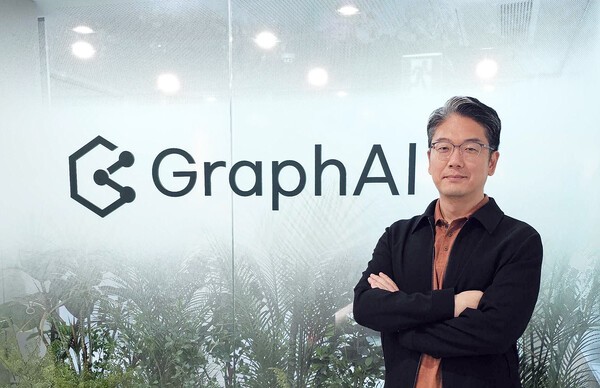
Against that backdrop, AI data infrastructure company Graphy is developing technologies to collect and structure distributed internal enterprise data. Graphy is also developing technology that connects data through DB and ontology into a form usable by AI. Graphy was founded in May 2022 by Kim Minsu, a professor in KAIST's School of Computing. Graphy CEO Kim Minsu said the key to enterprise AI success lies in data, and that expanding models alone has limits.
Graphy officially released "AkasicDB 1.0" last July. "AkasicDB 1.0" is a product that integrates graph, vector, relational DB, and keyword search functions into a single engine. It then unveiled "AkasicDB 2.0" in September.
Graphy is also expanding its product lineup. It is broadening its business by including "AkasicIN," which handles data collection and standardization, "AkasicON," an ontology-based operating platform, and "AkasicAI," an AI decision-making engine.
Moving beyond database technology development, Graphy is expanding into a data infrastructure for AI agents. At "VLDB 2026" held in Boston, Graphy unveiled "Enterprise Agent Memory."
"Enterprise Agent Memory" is a technology that supports enterprise AI agents in remembering work context. The technology supports data access permission management and policy management.
Graphy CEO Kim Minsu gave an interview to Techworld on the 10th. The interview covered the technical differentiation of AkasicDB, data issues in enterprise AI adoption, industry-specific application cases, and future business strategy.
Graphy recently raised 17 billion won in Series A funding, bringing cumulative investment to KRW 20.6 billion. The earlier investment assessment centered on its plan to develop a vector DB, and Graphy has since commercialized a vector DB and also a graph DB. It then developed AkasicDB, which combines vector DB and graph DB, and later expanded the scope to include a platform.
CEO Kim said that at the time of the previous funding round, the product had not yet been released, and that the investment was based on the plan to develop a vector DB. He said the company commercialized a vector DB in less than 2 years, and also commercialized a graph DB in less than 2 years. He added that Graphy then developed AkasicDB, which combines vector DB and graph DB, and also developed a platform, and that these achievements appear to have raised expectations.
CEO Kim said he came to appreciate the importance of data use in enterprise AI through meetings with client companies after founding the company. He said that although he studied efficient structuring of data and query and processing technologies at university, the real challenge in enterprise settings is connecting and using internal data with AI rather than model performance.
He said general-purpose large language models (LLM) do not know a company's own reports, do not know approval and sign-off records, and do not know work know-how. Accordingly, he said that to apply AI to actual work, data scattered across multiple systems must be connected, and the relationships and context of the data must be made understandable.
The speaker said there are many models that can be used like ChatGPT or Claude. However, he said such models alone have limits in solving enterprise problems.
He said a company's accumulated assets are documents, know-how, reports, and approval and sign-off records. However, he said the internal assets of a company are not known to AI models. He added that data in different forms is dispersed across the enterprise.
Accordingly, the speaker argued that a separate layer is needed to connect dispersed heterogeneous data and AI models in a way that makes both understandable and usable. He introduced Graphy's role as solving that connection point.
He said the reason AkasicDB is pursuing the integration of graph, vector, and relational DB also stems from the same problem awareness. He said the strength of vector search lies in finding semantically similar information, graph is needed for reasoning that follows relationships among data, and relational DB functions are needed for accurate numerical and conditional processing.
CEO Kim said he initially judged that data access was possible with vectors alone. However, he explained that as query complexity increased, the need for graph grew. He added that relational DB must be used in parallel to ensure numerical accuracy and handle data access conditions.
CEO Kim mentioned the trend of increasing AI use among employees at companies. He said AI usage is rising in enterprise settings, and token costs are also increasing accordingly. He added that high-performance commercial models can be used to secure high accuracy, but if AI use expands to each employee, costs can surge. He also said the cost burden on companies is large.
In response, Graphy said it is addressing the issue through data structuring. Comparison case 1 was a conventional combination of vector DB plus a high-performance commercial model for diverse industry data. Comparison case 2 was a method that structured data with Akasic and then applied a relatively inexpensive model.
The company said the latter showed higher performance in some cases. CEO Kim said that data structuring makes it possible to achieve high performance without relying on the performance of expensive models.
While conducting proofs of concept and business projects in defense, manufacturing, finance, and telecommunications, Graphy is applying technologies tailored to each industry's data environment, given that enterprise data problems differ by industry.
In this process, the defense sector has constraints associated with on-premises environments, with external cloud use difficult and commercial LLMs also hard to use freely.
In manufacturing, the key challenge is connecting data across multiple processes and systems. CEO Kim said manufacturing data is often fragmented or partially missing.
CEO Kim said that in such environments, a means of connecting integrated data and AI models is needed. Accordingly, Graphy is working on connecting seasoned workers' experience and judgment with data.
CEO Kim said the company conducted a proof of concept with a major shipbuilding company and improved answer quality by reflecting tacit knowledge from the field. He also said it confirmed the possibility of AI support for seasoned workers' judgment in another manufacturing setting.
He explained that even when data is not fully connected, it is possible to derive inferential results for part of a seasoned worker's judgment. He added that if more data is collected and connected, AI support can be expected for parts of an expert's role as well.
By industry, the finance sector was described as having diverse sources for the data it uses. Examples of financial data sources included news, disclosures, various indicators, and internal reports. The telecommunications sector was described as having data characteristics that include the network's own relational structure, and an analysis suggested that graph DB can be used in tracing the causes of outages.
Companies sympathize with the need for graph-based retrieval-augmented generation (RAG) and ontologies, but they remain cautious about actual adoption. That is because the results of adoption can vary depending on the vendor's technical level and implementation method. As a result, companies are increasingly inclined to confirm real-world effectiveness through proofs of concept before moving to full-scale projects.
CEO Kim said that actual results on the customer side are necessary for a transition to a full-scale project. He also forecast that if enough successful cases accumulate, the willingness of companies and public institutions to adopt will increase.
Graphy is developing technology that reduces human intervention in the ontology-building process. The conventional method involves engineers individually analyzing company data and designing the structure. In contrast, Graphy's approach forms relationships and systems based on actual data.
CEO Kim said he believed from the early days of the startup that Graphy could play a role similar to Palantir. He explained that the company identified demand in defense and manufacturing for connecting data with work systems.
CEO Kim said that in the case of Palantir, forward-deployed engineers (FDE) go deep into customer sites and connect data and work processes into ontologies. In contrast, he said Graphy extracts structure and relationships from actual data.
Graphy is expanding its scope with technology that reduces the manpower and time needed to build ontologies. CEO Kim said Graphy's focus is on increasing the share of automation in ontology building and maintenance.
Graphy is focusing product development on significantly reducing human intervention in ontology building and maintenance. The company plans to unveil related products soon.
Graphy said it is pursuing a full-stack strategy that connects products divided into data collection, DB, ontology, and agentic AI into a single system. It is also pursuing build-to-order business and plans to support end-to-end solutions for enterprise general-purpose software use in both cloud and on-premises environments.
Within this product strategy, Graphy also explained the need for balanced AI investment. Rather than leaning only on individual areas, it plans to release in the second half of the year an end-to-end solution that connects the entire process from data to agentic AI into one system.
CEO Kim serves concurrently as a professor and a corporate CEO. He said he holds both roles to narrow the gap between research and industry practice, and that he chose to found the company because there have been many cases where work breaks off after core technology development before reaching practical enterprise deployment, and he wanted to bridge that disconnect directly.
He also said that after founding the company, problems from industrial sites are feeding back into research topics. He said that as he identified real-world enterprise problems, the scope of research became more concrete, and as a result the number of papers increased.
CEO Kim said he believes interest in data infrastructure is relatively weak in Korea's AI industry. He said Korea's AI investment is concentrated on semiconductor chips and models, and analyzed that investment focus is also skewed toward models and computing infrastructure. Accordingly, he said investment needs to expand into the area that connects enterprise and institutional data to actual AI use.
CEO Kim said that many datasets in the world are not learned by models, and that data infrastructure is the area that enables such data to be used well. He also noted that discussion related to data infrastructure is lacking in Korea.
Regarding the public sector, he proposed the need for productized data infrastructure that is easy to adopt, rather than repeatedly building SI for each institution. He also said there is a need for an end-to-end solution that goes from data collection and connection through AI models and agents. He said the goal is to lower the barrier to data use in the public sector, manufacturing, and the private sector.
CEO Kim said the gap in data infrastructure compared with the United States is large. He added that model and data both need to be strengthened. He said he sees the point at which model-data balance is achieved as 3 to 5 years away, and expects that to boost the competitiveness of Korea's AI industry.
Source: TECHWORLD · Kim Seung-gi
Original: https://www.epnc.co.kr/news/articleView.html?idxno=406814
References
This article was produced with the help of an automated content generation algorithm.
Source: TECHWORLD
View originalThis article was summarized and organized by BizCrush based on the original article from TECHWORLD. For exact quotations and full details, please refer to the original article.