Samsung SDS Broadens Investment Focus to AX, RX, and Logistics, Eyes Robot Business in the U.S.
TECHWORLD · · 1 views
✦ AI Summary
Samsung SDS is broadening its investment focus to AX, RX, and logistics, and plans to invest a total of KRW 10 trillion in AI infrastructure and strategic M&A through 2031.
RX will initially target Samsung manufacturing affiliates for technology and business validation before expanding to external manufacturing customers and the U.S. market.
Samsung SDS plans to unveil its robot orchestration platform from 2027 and push ahead with U.S. market expansion, external partnerships, and broader security and AX initiatives.
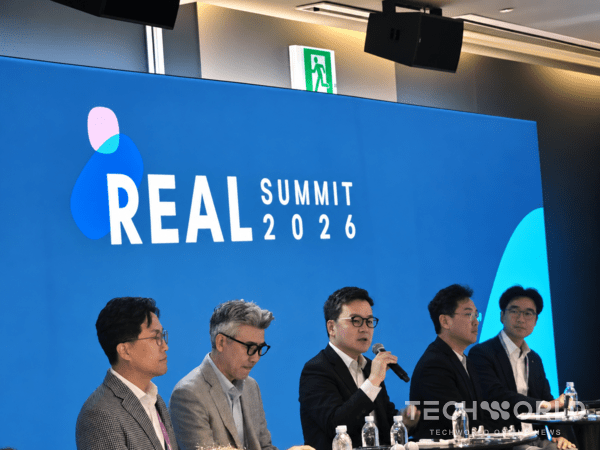
Samsung SDS is expanding its investment areas to AX, RX, and logistics. At a press briefing for the 'Real Summit 2026' event held on the 8th at COEX in Seoul, Samsung SDS CEO Lee Jun-hee said the company is broadening its investment focus beyond AI transformation to include robot transformation and logistics.
The robot business is also targeting the U.S. market. The initial deployment target for RX is Samsung manufacturing affiliates, and the plan is to expand to existing manufacturing customers and the U.S. market after verifying the technology and business viability at those affiliates.
This review was presented in the context of Samsung SDS examining new investment plans in AX, RX, and logistics after it signed an investment and partnership deal with global investment firm KKR in April. Lee said the company is reviewing technology and market direction related to AX transformation and is also considering equity investment related to robot foundation models (RFM) in the RX segment.
He also hinted at the possibility of additional investment in the air logistics segment. Lee said the company is working on investment and strategy development to strengthen air logistics and expects to introduce related results in the near future.
Samsung SDS issued KRW 1.22 trillion worth of convertible bonds (CB) to KKR in April. Based on the funds secured and its own investment capacity, Samsung SDS has drawn up a plan to invest a total of KRW 10 trillion in AI infrastructure and strategic mergers and acquisitions (M&A) through 2031.
The investment scope has expanded from AI infrastructure such as data centers and GPUs to new businesses. Lee said the KRW 10 trillion includes investments related to data centers and strategic M&A.
Lee said the company plans to push ahead with additional data center investments following the national AI computing center and the Gumi AI data center. He also explained that the company plans to secure GPUs and advance its DBO business.
Samsung SDS plans to proceed with large-scale investments sequentially by business rather than executing them all at once. It also said it intends to secure results through this step-by-step approach. However, it did not specify a timeline for recovering the investments. Lee said the company is moving forward after fully reviewing its internal investment capabilities and capacity, and explained that faster execution could enable faster returns. He added that he expects results to become visible soon.
Among its new investments, Samsung SDS has chosen RX as a new growth axis. Rather than developing and selling robot hardware itself, Samsung SDS is focusing on a business that connects robots from multiple manufacturers to existing production facilities and operates actual processes stably.
The first application target for this strategy is Samsung manufacturing affiliates. Samsung SDS has built production lines numbering more than 1,000 across those affiliates. While some of those lines already have a high level of automation, human-operated processes still remain. Based on this, Samsung SDS believes there is significant room to apply general-purpose robots.
Andae-jung, vice president in charge of Digital Factory at Samsung SDS, was reported to have said that the number of production lines built for Samsung manufacturing affiliates exceeds 1,000. He also said that because many lines still rely on manual work, automation using general-purpose robots is likely to come first.
Samsung SDS is using Samsung affiliates as its initial market and testbed, and has formed working groups with those affiliates. It is verifying whether general-purpose robots can secure the performance and quality required in actual production lines. Vice President Ahn said the most urgent task is to verify the performance and quality of general-purpose robots.
Once that verification is completed, Samsung SDS plans to expand its RX business to external manufacturing customers. In particular, about 430 manufacturing customers using Miracom Inc.'s MES are a key target. Ahn said these manufacturing customers also have demand for task automation, replacement of hazardous work, and substitution for manual work. He added that these manufacturing customers are the primary focus.
Samsung SDS aims to play a differentiated role in RX from simply supplying individual robots. The company is focusing on connecting robots from multiple manufacturers with production facilities and MES.
Samsung SDS is also focusing on seamless integrated operations across the entire process.
Robot orchestration was presented as a key technology for raising the level of automation across factories. Robot orchestration handles task allocation among heterogeneous robots and production facilities, as well as integrated management of operating status.
Lee said that for smooth factory operations, it is important to define work processes in situations where multiple workers are involved. He also emphasized the importance of coordination and cooperation systems among people. He added that the company is working to complete a robot orchestration platform linked with multiple types of robots and to put it into practical use.
Samsung SDS unveiled its plan on the day. It aims to formally launch the robot orchestration platform from 2027 and connect production facilities and robots from different manufacturers into a single operating system. After verifying the technology at affiliates and domestic manufacturing sites, it will move into overseas markets.
Samsung SDS sees the U.S. as a major global market for RX. It cited increased investment in production facilities driven by manufacturing reshoring as the basis for this view.
Vice President Ahn said that if results are achieved in Korea, the company will naturally look at the global market. He said demand in the U.S. market is especially high. Manufacturing reshoring is underway again in the U.S. market, and Ahn identified the U.S. as the top market for robot demand.
In the U.S., the company is reviewing a strategy of providing not only robots but also MES and other manufacturing IT systems. To do so, it plans to leverage its experience in automating domestic manufacturing sites and its robot operations capabilities as assets for the U.S. market push.
The company is pursuing robot technology acquisition by widely leveraging both domestic and overseas firms. Samsung SDS has formed a strategic partnership with Wuji Technology.
The purpose of this partnership is to apply China’s strengths in robot hand and end-effector technologies to manufacturing sites. Ahn evaluated China’s robotics hardware competitiveness, including hand and end-effector technologies. He said China’s technologies have strong cost competitiveness and that quality levels have also improved.
To respond to a wide range of tasks for Samsung manufacturing affiliates and more than 430 external customers, Samsung SDS is pushing to apply Chinese robot hand technology. For this, it is carrying out strategic cooperation with related companies.
In this process, Wuji Technology is participating in Samsung SDS’s robot coalition Team REX. Team REX is an ecosystem for building robot combinations tailored to manufacturing processes.
Team REX’s partners are domestic and overseas companies with technologies in robot hardware, intelligence, data, and simulation. Among them, the elements Samsung SDS emphasizes in cooperation with domestic companies are training data, model simulation, and manufacturing-site deployment capabilities. Samsung SDS assessed that the entities with an edge in robot body technology are U.S. and Chinese companies. By contrast, it said domestic companies have competitiveness in actual production-line deployment, performance improvement, and quality improvement.
Ahn said Korea’s robotics technology still lags in some areas compared with U.S. and Chinese robot hardware companies. However, he explained that Korea is focusing on integration, performance validation on manufacturing lines, and tuning technologies for implementing human-level performance and quality.
Lee said the three main focus areas for the RX business are domestic partnerships, Chinese partnerships, and U.S. partnerships. He explained that the business model avoids dependence on technology from any single country and instead combines each country’s strengths before applying them to manufacturing sites.
Lee said this approach also extends to promoting cooperation with global technology companies in the AX field and that the company is linking this to actual business. As an example, he said Samsung SDS will participate as a pilot partner in OpenAI’s Daybreak Partner Program, a cybersecurity program. Samsung SDS said it is the first Korean company to join the program as a pilot partner.
The press briefing also disclosed the partner selection process. It was explained that vulnerability-detection AI technology can potentially be abused for attack purposes, so companies operating the program are required to have a high level of security capability.
Lee said a high-level security capability review was conducted to secure partner eligibility. Samsung SDS said it obtained Daybreak pilot partner status through the relevant review.
Samsung SDS has been conducting internal tests for about 3 to 4 months. The purpose of the internal tests is to verify vulnerability-detection capabilities, vulnerability-remediation capabilities, and the qualifications of specialized personnel.
After going through such reviews, Samsung SDS plans to apply the technology to its own internal security inspections in the future. It then plans to extend the technology to security inspections for Korean companies, including those in the financial sector.
Samsung SDS is also continuing discussions with Anthropic on its cybersecurity project 'Glasswing.' Lee said the company has held many discussions with Anthropic. However, because the vulnerability verification process could potentially generate attack programs, Samsung SDS believes additional safety review is necessary regarding that possibility. Lee noted that Glasswing could be applied if security-related issues are resolved.
Samsung SDS is increasing its field workforce to expand its AX business. It plans to secure more than 200 FDEs by the end of this year.
However, the more than 200 FDEs will not all be newly hired. Samsung SDS plans to combine this with AI job transitions for existing employees who understand customer industries such as manufacturing and finance. It also plans to bring in additional outside talent in areas where experience is relatively limited.
Lee said the company’s workforce strategy combines both transitions and new hiring. He explained that employees with on-site understanding can transition by improving their understanding of LLMs and AI. On the other hand, he said the company plans to hire in areas where experience is relatively limited.
The scope of activity is not limited to Samsung affiliates. Lee said the company is considering both captive and external markets and will not target only one side or lean toward one. He explained that the company is preparing to provide everything customers need across all areas.
The investment direction discussed at Samsung SDS’s briefing goes beyond securing AI and robot technologies. The focus of AX has been set on linking AI with actual enterprise work. The focus of RX is combining domestic and overseas robot technologies with production facilities, and its goal is to connect with results on manufacturing sites.
Lee said AI is no longer in the stage of competition over adoption. He explained that the question companies are asking on the ground has shifted from whether to adopt AI to what AI has actually changed.
Source: TECHWORLD · Kim Seung-gi
Original: https://www.epnc.co.kr/news/articleView.html?idxno=406716
References
This article was produced with the help of an automated content generation algorithm.
Source: TECHWORLD
View originalThis article was summarized and organized by BizCrush based on the original article from TECHWORLD. For exact quotations and full details, please refer to the original article.