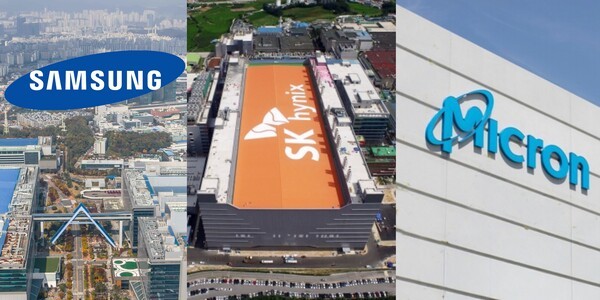
'We Don’t Have Memory' ... Samsung, SK hynix Memory Inventories Under 10 Days
TECHWORLD ·
✦ AI Summary
As investment in AI data centers surges, the global memory semiconductor market has entered a supply shortage phase.
KB Securities said Samsung Electronics’ and SK hynix’s memory inventories were under 10 days as of the third quarter.
Micron posted record-high results on surging demand for AI memory and is pushing to expand supply.
As investment in AI data centers surges, the global memory semiconductor market is entering an unprecedented supply shortage. Market analysts have assessed that Samsung Electronics’ memory inventory is under 10 days, and SK hynix’s memory inventory is also under 10 days. Micron, benefiting from the surge in demand for AI memory, posted record-high results and is accelerating supply expansion.
Analysts say this memory cycle is different from past cycles. The difference is that demand is not rising simply because of a cyclical recovery; rather, the key driver is structural demand expansion centered on AI servers. As demand for HBM, server DDR5 used with CPU, and enterprise SSDs (eSSD) rises at the same time, overall demand for memory for AI infrastructure is expanding simultaneously. As a result, analysts say suppliers’ production capacity is being rapidly depleted.
KB Securities said in a recent report on the 8th that Samsung Electronics’ and SK hynix’s memory inventories were under 10 days as of the third quarter of this year. The report said the two companies’ memory inventories had fallen to very low levels.
In the memory semiconductor industry, inventory levels are a key indicator that determines prices and earnings. When inventories rise, companies tend to lower prices to secure shipment volume. By contrast, when inventories plunge, their ability to respond to customer orders becomes limited.
When inventories plunge, upward pressure on prices also increases. KB Securities judged that the current situation goes beyond a simple inventory decline.
That is because memory demand is surging alongside expanding AI infrastructure investment. In particular, AI infrastructure spending by global hyperscalers is strongly driving memory demand. As a result, the possibility that the market will face a shortage of salable supply is also increasing.
AI servers require memory and storage devices such as high-bandwidth memory (HBM), server DDR5 used with CPU, and eSSD for storing large-scale AI data. In addition, when AI model training expands, demand for memory and storage devices rises, and the same is true when inference services expand.
A new supply-side variable is the transition to HBM4. In the production process, HBM requires more wafer manufacturing capacity than conventional DRAM.
As major memory makers such as Samsung Electronics and SK hynix expand the share of HBM production, a structure is emerging in which, under limited production capacity, the volume allocated to general-purpose DRAM is shrinking.
Against this backdrop, if demand for AI HBM and server DDR5 rises at the same time, supply of general-purpose DRAM could also become tight.
Taking capacity constraints into account, KB Securities forecast that in 2027 the growth rate of demand for DRAM and NAND bits could be more than 10 percentage points higher than the growth rate of supply. Accordingly, the memory market could face not just a simple price upcycle, but a genuine supply shortage.
It is difficult to expand memory production capacity quickly in the short term. Increasing supply requires building new memory fabs, and after equipment is brought in, the process of stabilizing yields is also necessary. For this reason, it takes considerable time before actual production can be increased.
By contrast, the pace of AI data center investment is faster than the expansion of production capacity. As a result, pressure to meet memory demand continues to build.
Amid this trend, Micron, the world’s No. 3 memory maker, is at the center of rising demand for AI memory. Micron’s revenue for the third quarter of fiscal 2026 was USD 41.456 billion, a sharp increase from USD 23.86 billion in the previous quarter. Net income under GAAP for the same period was USD 28.243 billion.
Micron believes the strategic value of memory has risen significantly in the AI era. Accordingly, it is expanding investment in technology, products, and supply, and is focusing on high-performance memory for AI servers. It is also working to secure production capacity to meet customer demand.
In the AI-driven memory supercycle, Micron’s inventory situation needs to be assessed separately from that of Samsung Electronics and SK hynix. Micron disclosed inventory of USD 8.567 billion at the end of the third quarter of fiscal 2026. KB Securities presented a “memory inventory under 10 days” analysis for Samsung Electronics and SK hynix, but there are calls to note that applying that same inventory analysis to Micron would be inappropriate.
Micron is investing in production facilities in the United States to expand supply. The company is pushing to strengthen advanced DRAM production in the U.S. and is also advancing R&D and advanced HBM packaging capabilities. Micron is also pursuing large-scale investment plans in these areas.
However, it takes time for new production facilities to move into mass production. For that reason, there is a view that investment in new facilities has limits when it comes to easing short-term supply shortages. Despite investment in expanded U.S. production, R&D, and advanced HBM packaging capabilities, the short-term effect on supply-demand conditions is expected to remain limited.
With 2027 seen as a turning point, the key variable in the global memory market is the widening gap between AI infrastructure investment and memory supply capacity. Ultimately, the direction of the market is expected to be determined by the difference between the pace of AI infrastructure investment growth and the pace of memory supply capacity expansion.
In the past, the memory industry repeatedly moved between boom and bust depending on cyclical changes in downstream industries such as PCs and smartphones. However, the market structure is changing now with the emergence of AI data centers as a new major source of demand. In addition to HBM growth, server DRAM and eSSD are growing in tandem, changing the supply-demand structure of the entire memory industry.
Adding to this, the burden on production capacity from the transition to HBM4 is increasing, leaving memory companies unable to fully supply the rising demand. According to KB Securities’ analysis, Samsung Electronics’ and SK hynix’s inventories are under 10 days. This inventory level is cited as a representative indicator of market change.
Against this backdrop, Micron has posted record results and moved to expand investment aggressively, responding to AI memory demand. Accordingly, the three major global players need rapid reorganization of production capacity to keep up with surging AI demand.
A semiconductor industry expert said that if AI data center investment expands as expected, the likelihood of memory shortages will rise, and if the transition to HBM4 gains momentum, the shortage could spread from memory to general-purpose DRAM and NAND. Accordingly, the memory market is shifting from a “demand recovery” phase to a “supply shortage” phase, and the key variables going forward are expected to be the pace at which Samsung Electronics, SK hynix, and Micron expand production capacity and the competition among Samsung Electronics, SK hynix, and Micron to win customer accounts, which are likely to determine the future landscape of the memory market.
Source: TECHWORLD · Park Gyu-chan
Original: https://www.epnc.co.kr/news/articleView.html?idxno=406648
References
This article was produced with the help of an automated content generation algorithm.
Source: TECHWORLD
View originalThis article was summarized and organized by BizCrush based on the original article from TECHWORLD. For exact quotations and full details, please refer to the original article.