Neosapience to Move Beyond Typecast With Neona, Targeting B2B and Global Expansion
TECHWORLD ·
✦ AI Summary
Neosapience said it will expand its voice generation business into conversational AI and B2B following its KOSDAQ listing, and nurture Neona as a new growth engine.
The company operates Typecast and is commercializing based on its voice generation technology and its integrated technology for speech recognition, language models, and voice generation.
Neosapience is pushing B2B revenue growth and overseas expansion, while setting targets of a return to operating profit in 2027 and an operating margin of 32% in 2028.
Neosapience will expand its voice generation business into conversational AI and B2B after its KOSDAQ listing. The company plans to cultivate "Neona" as a new growth engine by leveraging its proprietary voice generation technology and existing customer base, while also accelerating its push into overseas markets.
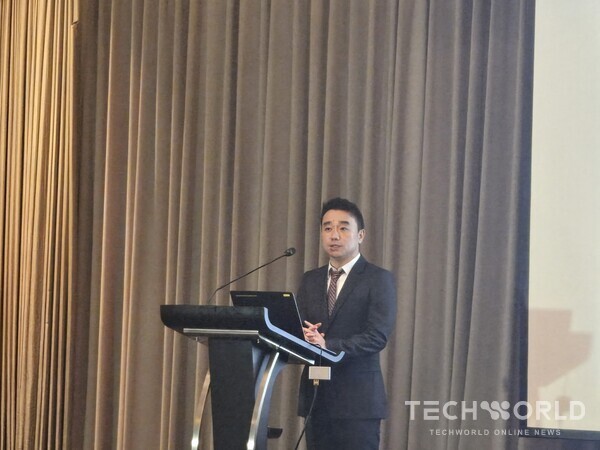
On the 7th, Neosapience held an IPO press conference in Yeouido, Yeongdeungpo-gu, Seoul, and disclosed its core technologies, business strategy, and post-listing growth plans. Founded in 2017, Neosapience operates the generative AI platform "Typecast."
"Typecast" is a platform that converts text into speech with emotion and intonation. Based on this, Neosapience has secured more than 720 voice IPs, 3.2 million cumulative subscribers across 226 countries, and more than 2,000 domestic corporate customers. Its domestic clients include the three major telecom operators and the three terrestrial broadcasters.
Kim Tae-soo, CEO of Neosapience, said the company has been developing and commercializing text-to-speech generation technology. He added that the business is not stopping at voice generation, but is evolving into conversational AI centered on listening to and communicating with voices.
In voice generation, Neosapience is highlighting its in-house voice generation foundation model and attribute-controlled voice generation technology as core competitive strengths. Adjustable attributes include speaker, emotion, tone, speed, and pitch, and the company is focusing on generating context-appropriate expressions.
To this end, Neosapience has collected more than 5 million hours of data for training its voice generation model, of which 1.3 million hours have been refined into a trainable format. The data spans 37 languages.
Kim said it would take more than 500 years for a person to manually listen through 1.3 million hours of content. He also said the voice generation model was built with in-house technology rather than by using existing open-source tools.
For its LLM strategy, Neosapience has chosen to optimize and lightweight open-source models rather than develop one from scratch. It has developed its own speech recognition model and internalized the technology for integrating speech recognition, language models, and voice generation into a single system.
Kim said developing a language model from the ground up carries a heavy cost burden. He added that the company possesses integrated technology for speech recognition, language models, and voice generation.
Based on these technologies, Neosapience is advancing a new business, the conversational AI "Neona." Neona is an AI agent built on a structure that combines speech recognition, language models, and voice generation.
While Typecast focused on voice generation, Neona has the ability to recognize and respond to user speech in real time. As a result, Neona has expanded into a scope that covers the full process of listening, judgment, and speaking.
Neosapience plans to connect Typecast customers with demand for conversational AI to Neona. Through this, it aims to expand B2B revenue. Kim said many Typecast API customers are considering adopting conversational AI, and that converting those companies into customers for conversational AI agents could generate additional revenue.
Neosapience has begun commercialization. In May, it started its first commercialization partnership with Yoonsaengsaeng for an AI tutor, and it is conducting a paid proof of concept (PoC) with Pluglink, an electric vehicle charging operator.
The company plans to expand its application areas in the future. The target areas include physical AI such as AI contact centers, edtech, robots, and smart devices.
On a consolidated basis, revenue last year was KRW 10.6 billion, and the average annual growth rate over the past 3 years was 66.4%. Revenue was composed of about 70% B2C content creators and 30% B2B. Kim said subscription revenue accounted for almost 100% of total revenue in 2025, and the company said the average revenue per B2B customer is about 100 times higher than in B2C.
Kim said the company is pursuing two growth engines: overseas expansion and B2B growth, given that average revenue per B2B customer is about 100 times higher than in B2C. The B2B business operates on 1-year or 3-year contracts, with conditions set by customer-specific credit or token usage. The company’s strategy is to reduce earnings volatility by expanding long-term contracts and usage-based recurring revenue rather than one-off order-based business.
The company is pursuing a voice-based AI companion as a new B2C business. Its strengths were presented as natural voice conversation and emotional expression.
After verifying market viability in South Korea, the company is planning to expand services in Japan and Taiwan. Accordingly, it intends to push into the Japanese and Taiwanese AI companion markets.
Its stance on addressing character AI safety issues in this process is conservative. The current AI companion app blocks adult NSFW conversations, and if such a conversation is attempted, continuation of the dialogue is disabled. Kim said that many character chat apps allow adult conversations, but that its app does not. He also said that even when expanding the service scope in the future, the company will review such expansion only on the premise of conservatively adhering to AI ethics.
The company’s overseas expansion strategy separates the U.S. market from Asian markets. For the U.S. market, it has identified kids content and education, which require emotional acting and specialized voices, as priority areas.
After the listing, Neosapience has identified improving profitability as a key task, and it said it aims to turn to operating profit in 2027 and achieve an operating margin of 32% in 2028.
Its net loss last year was KRW 1.733 billion, down from a net loss of KRW 6.994 billion in 2024. Kim said this means the company can achieve an early profit after listing, and he expects it to post a profit next year.
The IPO includes 2 million offered shares, and the desired offering price is KRW 13,800–15,800. The planned offering amount is KRW 27.6–31.6 billion, with institutional demand forecasting set to run through the 8th and general subscriptions on the 10th and 11th. Daishin Securities is the lead underwriter.
Source: TECHWORLD · Kim Seung-gi
Original: https://www.epnc.co.kr/news/articleView.html?idxno=406634
References
This article was produced with the help of an automated content generation algorithm.
Source: TECHWORLD
View originalThis article was summarized and organized by BizCrush based on the original article from TECHWORLD. For exact quotations and full details, please refer to the original article.