Kakao Splits Into Two Companies for AI and Investment, With KakaoTalk and AI Run Separately
IT DAILY · · 2 views
✦ AI Summary
Kakao has decided on a spin-off that separates the platform business, which will run direct services centered on KakaoTalk and AI, from the functions that manage affiliates and invest in new businesses.
The newly established KakaoAI will handle the platform business centered on KakaoTalk and AI, while the surviving KakaoX will manage finance, content and mobility affiliates and investment businesses.
Kakao plans to hold an extraordinary general meeting on Dec. 17, complete the split on Jan. 1 next year, and then pursue relisting and modified listing on Jan. 27 the same month.
Kakao, after spending the past two years cleaning up non-core businesses and affiliates, has begun overhauling its business structure and decided to separate the platform business that will run direct services centered on KakaoTalk and AI from the functions that manage affiliates in finance, content and mobility and invest in new businesses. The key point of the split is carving out the platform business and affiliate management and investment functions into separate companies.
After a board meeting on the 21st, Kakao decided on a spin-off through a board resolution on the same day. The two companies involved in the split are the newly established KakaoAI and the surviving KakaoX. KakaoAI, the entity carved out of the platform business, will handle direct services centered on KakaoTalk and AI, while KakaoX will manage affiliates in finance, content and mobility and invest in new businesses.
The background for the separation is differences in business characteristics and stages of growth. The reorganization direction is to apply independent decision-making systems to the AI business and the investment business, and to apply independent capital allocation systems to each. This reflects a plan to apply separate decision-making and capital allocation to the two areas.
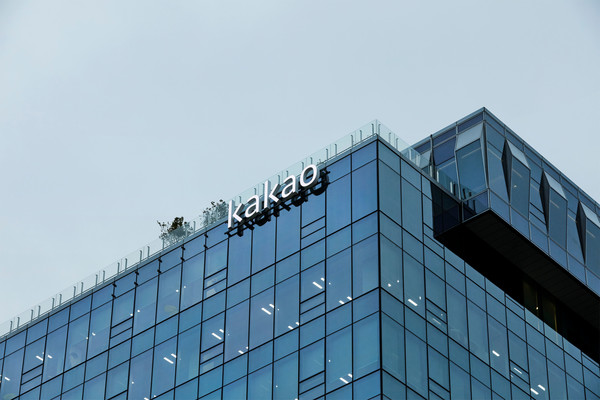
The split ratio is based on book value of net assets, with KakaoAI at 0.36 and KakaoX at 0.64. Existing Kakao shareholders will receive shares in both companies in proportion to the ratio. The related photo shows Kakao's Pangyo office in Seongnam, Gyeonggi Province. [IT Daily]
Since CEO Chae Shin-ah took office, Kakao has pushed ahead with trimming non-core businesses and has continued simplifying the group structure, including reducing affiliates. Kakao says it plans to complete its structural cleanup this year and has presented a strategy to refocus growth on AI and global businesses.
This spin-off is a follow-up step that separates management systems by growth business on the basis of the structural cleanup. Kakao has set up a structure that places KakaoTalk and AI under separate companies.
Through this structure, AI business investment and performance will be evaluated separately from affiliate businesses such as finance, content and mobility. Kakao has positioned KakaoTalk as the key touchpoint for AI services and is moving AI to the forefront as an independent growth engine rather than merely a technology that supports existing businesses.
The newly established KakaoAI will be responsible for the platform business combining advertising and commerce centered on KakaoTalk and AI. Current Kakao CEO Chae Shin-ah has been tapped to become CEO of KakaoAI, and DKtechin and K&W will be incorporated as operating subsidiaries under KakaoAI.
KakaoAI plans to transform KakaoTalk into an "agentic AI interface." When a user enters a message, an AI agent will activate, understand the user's intent and context, and then connect them to the necessary service. In this process, the AI agent will serve as a link to related services and specialized agents, and the scope of handling will extend from search and recommendations to purchases and payments.
At the same time, Kakao is pushing to combine AI with its existing KakaoTalk advertising and commerce businesses. Through this, it aims to foster AI advertising, agentic commerce and subscriptions as new revenue sources, with the core goal of turning expanded AI usage into actual sales.
KakaoAI's push is based on the platform business. In the second quarter, Kakao posted consolidated revenue of KRW 2.0985 trillion and consolidated operating profit of KRW 277 billion, both quarterly records. Platform segment revenue came to KRW 1.2303 trillion, up 17% from a year earlier. KakaoAI will use this platform business as its base to pursue AI investment and monetization independently.
KakaoAI set a goal of securing more than 20 million daily active users (DAU) for AI by 2030. It also plans to increase platform engagement time by more than 50% by 2030, achieve average annual revenue growth of about 20%, and reach more than KRW 6 trillion in revenue by 2030. In addition, it has set a target for AI revenue to account for double digits of total revenue in 2028 and for AI revenue to exceed KRW 1 trillion in 2030.
Meanwhile, KakaoX will be reorganized into an investment company responsible for affiliate management and investment businesses. KakaoX will handle finance, content and mobility affiliates as well as investment activities.
Kim Do-young, CEO of Kakao Investment and head of Kakao CA Council's group investment strategy office, has been tapped to lead KakaoX. Under KakaoX, Techfin will include Kakao Bank, Kakao Pay and Kakao Pay Securities; content will include Kakao Entertainment, SM Entertainment and Kakao Piccoma; and mobility will include Kakao Mobility.
KakaoX will be responsible for managing the growth of existing core affiliates. In addition, it will review virtual assets, physical AI and global fandom as new business and investment areas.
After the split, Kakao will apply different investment and shareholder return frameworks to KakaoAI and KakaoX. KakaoX will be the main focus for investment resources, and Kakao plans to use about KRW 2.3 trillion in funds raised through monetizing assets it holds and about KRW 4.1 trillion in subsidiary-held funds. The purpose is to discover new businesses and invest in innovative companies. The two companies will also follow different capital allocation principles.
KakaoAI will use 20% to 35% of separate adjusted free cash flow (FCF) as its basic shareholder return source. KakaoX, meanwhile, will use 30% of subsidiary dividends and 30% of investment gains as shareholder return resources. Kakao also announced a plan to buy back and cancel its own shares worth KRW 300 billion by using gains from the sale of its Dunamu stake. KakaoAI is tasked with converting KakaoTalk's user base of about 50 million people into AI service usage and revenue.
KakaoX will be responsible for boosting the value of existing affiliates with large-scale investment resources and identifying new growth businesses. Its main business revenue target is to grow at an average annual rate of 13.3% through 2030 and expand to more than KRW 10 trillion. After the split, the key issue is whether the growth strategies of the two companies will translate into real results. Ultimately, success will depend on whether each company can turn this structure into actual growth, revenue and higher affiliate value.
Kakao plans to hold an extraordinary general meeting of shareholders on Dec. 17 and complete the split on Jan. 1 next year. After that, Kakao plans to pursue the relisting of KakaoAI and the modified listing of KakaoX, with both target dates set for Jan. 27 next year, and aims to complete the procedures within the same month.
Chae Shin-ah, CEO of Kakao, said the purpose of the split is to shift to a speed-and-accountability structure suited to the AI era. She added that after the split, Kakao will establish business-specific strategies for KakaoAI and KakaoX, set business-specific capital allocation principles for both companies, accelerate execution, and make efforts to communicate performance transparently to the market.
Source: IT DAILY · Kim Byeong-ju
Original: https://www.itdaily.kr/news/articleView.html?idxno=241125
References
This article was produced with the help of an automated content generation algorithm.
Source: IT DAILY
View originalThis article was summarized and organized by BizCrush based on the original article from IT DAILY. For exact quotations and full details, please refer to the original article.