NVIDIA RTX Spark Touts Local AI, But Price Barrier and Unclear Target Remain Challenges
IT DAILY ·
✦ Resumen de IA
NVIDIA unveiled the NVIDIA RTX Spark at a press briefing in Seoul.
RTX Spark was described as a product that combines RTX graphics technology and NVIDIA's full-stack AI platform in a Windows PC form factor, with up to 128GB of unified memory and 1 PFLOPS of AI compute performance.
Domestic prices are set at around KRW 5 million for the 24GB model, around KRW 7 million for the 64GB model, and around KRW 9 million for the 128GB model, and Jeff Yen said it is a premium product.
BizCrushWant to follow Korean talks and live streams in real time?Try BizCrush Live
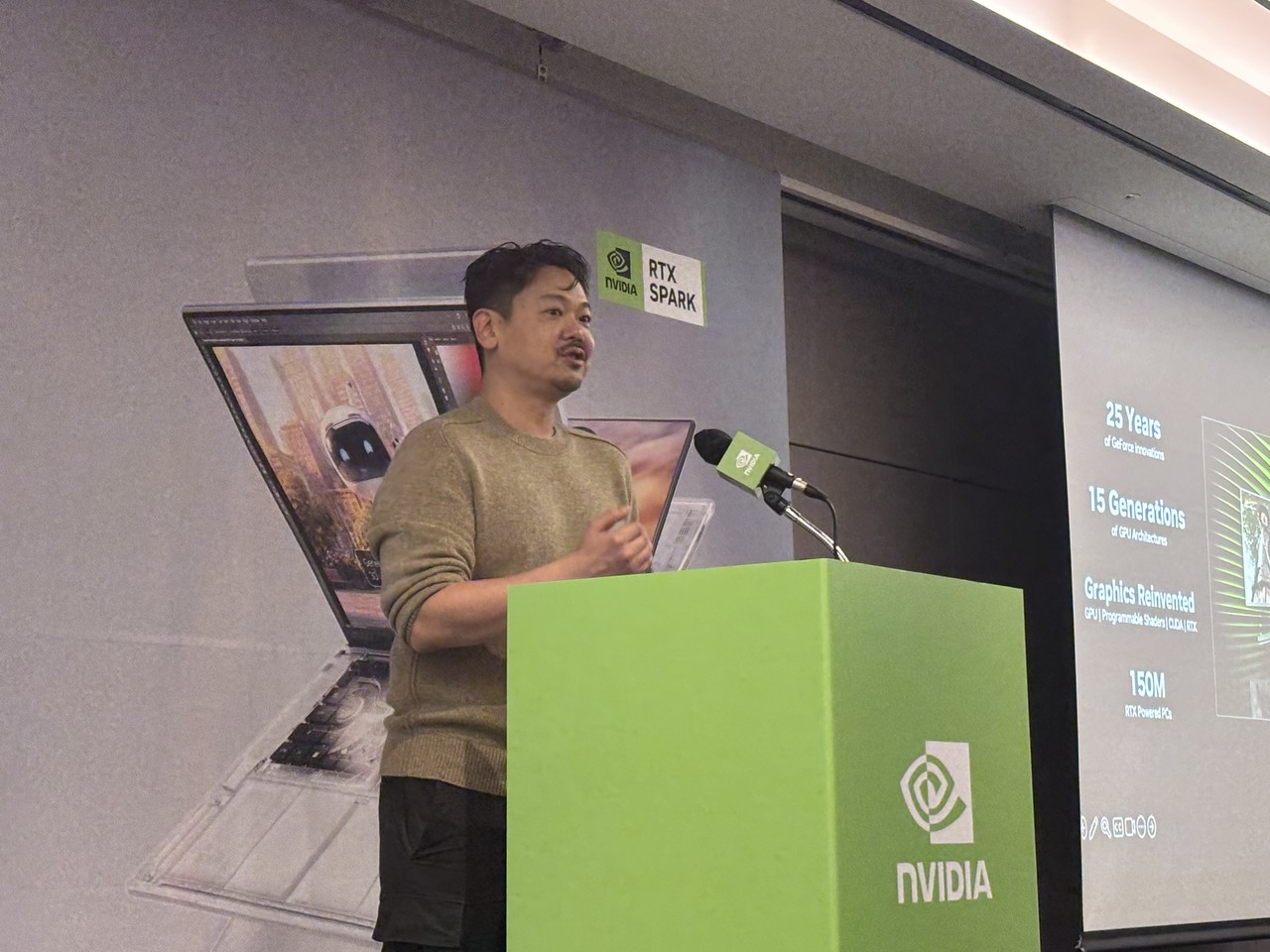
NVIDIA has officially unveiled the NVIDIA RTX Spark in the South Korean market. On the 6th, NVIDIA held a press briefing in Seoul for the NVIDIA RTX Spark, presenting it as part of efforts to enable high-performance local AI workloads on Windows PCs and expand the personal AI computing ecosystem.
At the briefing, NVIDIA disclosed product performance and real-world use cases across development, creation, and gaming. The presentation was delivered by Jeff Yen, NVIDIA marketing director.
At the venue, RTX Spark was introduced as a product built on the Windows PC form factor. NVIDIA said it combines RTX graphics technology with its full-stack AI platform, and is equipped with up to 128GB of unified memory and 1 PFLOPS of AI compute performance.
NVIDIA stressed that RTX Spark can run local large language models (LLMs) and complex AI agents in real time in a Windows environment without a cloud connection. RTX Spark was first introduced in June, when Jensen Huang, NVIDIA's founder and CEO, visited South Korea, and domestic sales began after a launch event at COEX in October.
Jeff Yen, NVIDIA APAC technical marketing director, said in his presentation that RTX Spark is a new superchip combining a Blackwell architecture GPU, an ultra-efficient CPU, and large unified memory. He added that RTX Spark can run around the clock without a cloud connection while preserving privacy and avoiding latency.
In the demonstration session that followed, the company introduced a 'Chief of Staff' agent for schedule management and work support, a 'Microduck' development agent, and a 'video producer agent' for automating video production workflows.
The event also used actual devices from Microsoft, Asus, MSI, and Lenovo to demonstrate a local AI agent operating environment and the latest gaming performance powered by DLSS.
Beyond the live demonstrations themselves, the main issue raised on site was the high price tag in the several million won range and questions about the product's real target user base. Domestic retail prices are set at around KRW 5 million for the 24GB model, around KRW 7 million for the 64GB model, and around KRW 9 million for the 128GB model.
Against that price range, attendees pointed out that for gaming and content creation use cases, existing x86-based laptops equipped with the RTX 5080 would be more cost-effective. The argument was that, with prices reaching the KRW 5 million to KRW 9 million range, such views naturally arose in use cases where the comparison target is clear.
In response, Jeff Yen acknowledged the high price point. He said he fully agrees that the current price level is high, and that no one in today's market would view the product as cheap. He then characterized the product's positioning as premium and summed it up as an obviously premium product.
He identified developers, creators, and long-waiting early adopters and enthusiastic fans as the initial demand base. He also said the market for existing x86 processor plus discrete GPU combinations will continue.
He said selection would likely diverge depending on customer use cases. He said the use case to be implemented would become the selection criterion, and that the two markets would therefore coexist.
A question was then raised about the ROI of adopting expensive hardware compared with cloud AI services. NVIDIA stressed that, rather than ROI, qualitative value by workload is what matters.
The criticism also noted that everyday AI agent tasks such as managing schedules and email can already be handled sufficiently by the cloud or a regular PC, and that it is unclear what concrete business case would justify spending more than KRW 5 million. Jeff Yen said he could not specify the payback period for the device. He explained that the product is not something to be evaluated like a Bitcoin miner in terms of revenue recovery, and pointed to the user's workflow as the basis for assessing value.
As a practical example of productivity benefits, Jeff Yen cited always-on management for project managers and personal work environments. He explained that local agents can deliver significant value in tracking multiple projects and coordinating schedules for large project PMs. He also said that on a boat or a remote island with no internet access, users can run an always-on PC agent 24 hours a day, and that this feature is the essential differentiator of RTX Spark.
During the presentation, Jeff Yen devoted considerable time to explaining how AI workload benchmark evaluations are conducted.
He said traditional benchmarks focus purely on speed. By contrast, AI benchmarks must evaluate both speed and accuracy. He said fast output is meaningless if the answer is wrong, and stressed that the evaluation criteria must accurately simulate the user's actual application environment.
Source: IT DAILY · Kwon Young-seok
Original: https://www.itdaily.kr/news/articleView.html?idxno=242751
References
This article was produced with the help of an automated content generation algorithm.
Source: IT DAILY
Ver originalThis article was summarized and organized by BizCrush based on the original article from IT DAILY. For exact quotations and full details, please refer to the original article.
Keep reading
BizCrush