TSMC May Build 6 Fabs in Texas as Second U.S. Production Hub Idea Gains Traction
TECHWORLD ·
✦ Resumen de IA
According to local reports in Taiwan, TSMC is considering building a second production base in Texas after Arizona.
The concept under review is to build 6 leading-edge semiconductor fabs in Texas, and it is still awaiting TSMC board approval.
Formosa Plastics and Taiwan Paper are planning to establish FTA Tech, a joint venture for producing high-purity hydrochloric acid for semiconductor manufacturing in the U.S., and Formosa Plastics is also pushing to expand high-purity sulfuric acid production in Taiwan.
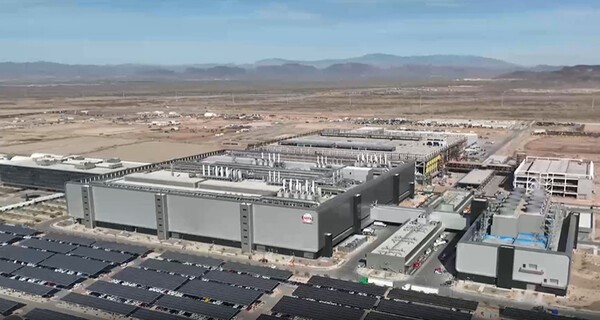
According to local reports in Taiwan, TSMC is moving to expand its semiconductor production capacity in the United States. On the 2nd, industry sources said multiple Taiwanese media outlets, citing a person familiar with Taiwan's semiconductor manufacturing equipment supply chain, reported that TSMC is considering building a second production base in Texas after Arizona.
The concept under review would involve building 6 leading-edge semiconductor fabs in Texas, making it a large-scale production hub plan. TSMC is reportedly looking at adding a Texas base to its existing Arizona operation to expand production capacity in the U.S.
The proposal is still awaiting TSMC board approval. If the investment becomes reality, the amount could exceed the USD 265 billion plan for the Arizona production base, according to projections.
The background for this review of expanded local production in the U.S. includes the growing AI market and the expanding HPC market. In addition, rising demand in the U.S. for AI and HPC from major customers such as Apple, Nvidia, Intel, and AMD, U.S. tariff policy, and production constraints in Taiwan were all cited as combined factors.
In the first half of 2026, U.S. customers accounted for about 75.64% of TSMC's revenue. As a result, analysts say the need to secure production capacity near major customers is increasing, along with the need to respond to U.S. tariff risks.
In this context, one reason for reviewing a second production base in Texas is said to be the local industrial infrastructure. Dallas and North Texas are home to concentrated semiconductor manufacturing, optical communications, and defense industries, and the region is also known as the "Silicon Prairie."
Dallas and North Texas are seen as offering abundant labor, relatively stable power supply, and a lower tax burden. These advantages are viewed as factors that could partly avoid the water, power, and labor issues faced by the Arizona production base.
Sherman is located north of Dallas. In Sherman, GlobalWafers (GF: GlobalWafers) operates the largest 300mm silicon wafer plant in the U.S.
Based on this, a supply chain from semiconductor materials to manufacturing is taking shape. This supply chain formation is cited as a factor supporting the possibility of TSMC entering Texas.
If TSMC establishes a large-scale production base in Texas, the possibility has been raised that Taiwanese suppliers of semiconductor manufacturing equipment, materials, and chemicals will expand their investments in the U.S. As a result, moves to build a local semiconductor supply chain in the U.S. could accelerate. Some in Taiwan's semiconductor industry also say that the Texas base could introduce a more advanced process node than Arizona.
However, it remains uncertain whether a large-scale investment in Texas will actually proceed. TSMC is already pursuing plans to build at least 12 facilities in Arizona, including advanced semiconductors and advanced packaging, so if a large-scale Texas investment is added, it would need to review the funding burden. It is also noted that adding such a Texas investment would create many additional factors to consider in terms of production capacity planning.
For these reasons, even if the Texas plan materializes, actual construction of production facilities could begin sometime after the 2030s. Changes in future demand for AI semiconductors are expected to be a key variable.
In line with TSMC's move to expand production in the U.S., Taiwanese materials companies are also moving to establish local production systems in the country.
Amid this trend, Formosa Plastics and Taiwan Paper are planning to establish a joint venture, FTA Tech, to produce high-purity hydrochloric acid for semiconductor manufacturing in the U.S.
FTA Tech will have capital of USD 38.1 million, and the ownership structure will be 50% Taiwan Paper, 25% Formosa Plastics, and 25% for its U.S. subsidiary.
The new plant is scheduled to be built near Formosa Plastics' Texas plant, and the capital investment will be USD 129.8 million.
Formosa Plastics plans to build a system that purifies food-grade hydrochloric acid produced by its U.S. subsidiary into electronic-grade hydrochloric acid used to remove metallic contaminants from wafer surfaces, with operations scheduled to begin after December 2028.
Semiconductor chemicals are considered highly important to produce locally near semiconductor fabrication facilities because maintaining quality and managing transportation are both difficult. For this reason, the investment is seen as meaningful in that it seeks to combine an expanded U.S. semiconductor production network with Taiwanese materials technology and production capacity.
Taiwan Paper produces electronic-grade hydrochloric acid in Tainan, Taiwan, and supplies it to semiconductor companies in Taiwan, South Korea, and Singapore. Formosa Plastics expects demand for electronic-grade hydrochloric acid to grow at an average annual rate of 9.5% over the next 10 years, based on semiconductor investment in the U.S. and investments including TSMC.
According to local media reports, Formosa Plastics is pushing to expand production of high-purity sulfuric acid for semiconductors in Taiwan. To that end, Formosa Plastics plans to establish a joint venture with China Petrochemical Development Corporation and others to produce high-purity sulfuric acid for semiconductors. The joint venture's capital will be TWD 6 billion, and the capital investment will be TWD 6.8 billion. The target for operations is December 2028 for phase 1 and 2030 for phase 2.
Industry experts expect the number of cleaning processes to increase as semiconductor devices continue to shrink, and Formosa Plastics forecasts that demand for high-purity sulfuric acid in Taiwan will exceed supply capacity in 2028. At the same time, the industry has pointed to the possibility of TSMC expanding its production base in the U.S., while Taiwanese materials companies' local investments in the U.S. have also been raised, making the possible expansion of the semiconductor manufacturing ecosystem in the U.S. a key point to watch, along with whether its scope will include not only equipment but also materials and chemicals.
Source: TECHWORLD · Park Gyu-chan
Original: https://www.epnc.co.kr/news/articleView.html?idxno=407709
References
This article was produced with the help of an automated content generation algorithm.
Source: TECHWORLD
Ver originalThis article was summarized and organized by BizCrush based on the original article from TECHWORLD. For exact quotations and full details, please refer to the original article.