LGU+ Pursues Joint Research With Opt.ai on ‘Token Optimization’ Technology
IT DAILY ·
✦ Resumen de IA
LG Uplus is pursuing cooperation with Opt.ai on developing token optimization technology to improve AI operating efficiency.
Based on LG Uplus's real-world experience operating AI services and Opt.ai's expertise in lightening AI models and enabling high-speed operation, the two companies will handle technology verification and research and development.
LG Uplus said that in its GPU-based AI model optimization research, the amount of tokens a single GPU can process has expanded by up to 4 times compared with before.
LG Uplus has teamed up with Opt.ai, a company specializing in AI model optimization, to improve AI operating efficiency. LG Uplus and Opt.ai are pursuing token optimization technology to enhance the efficiency of AI operations.
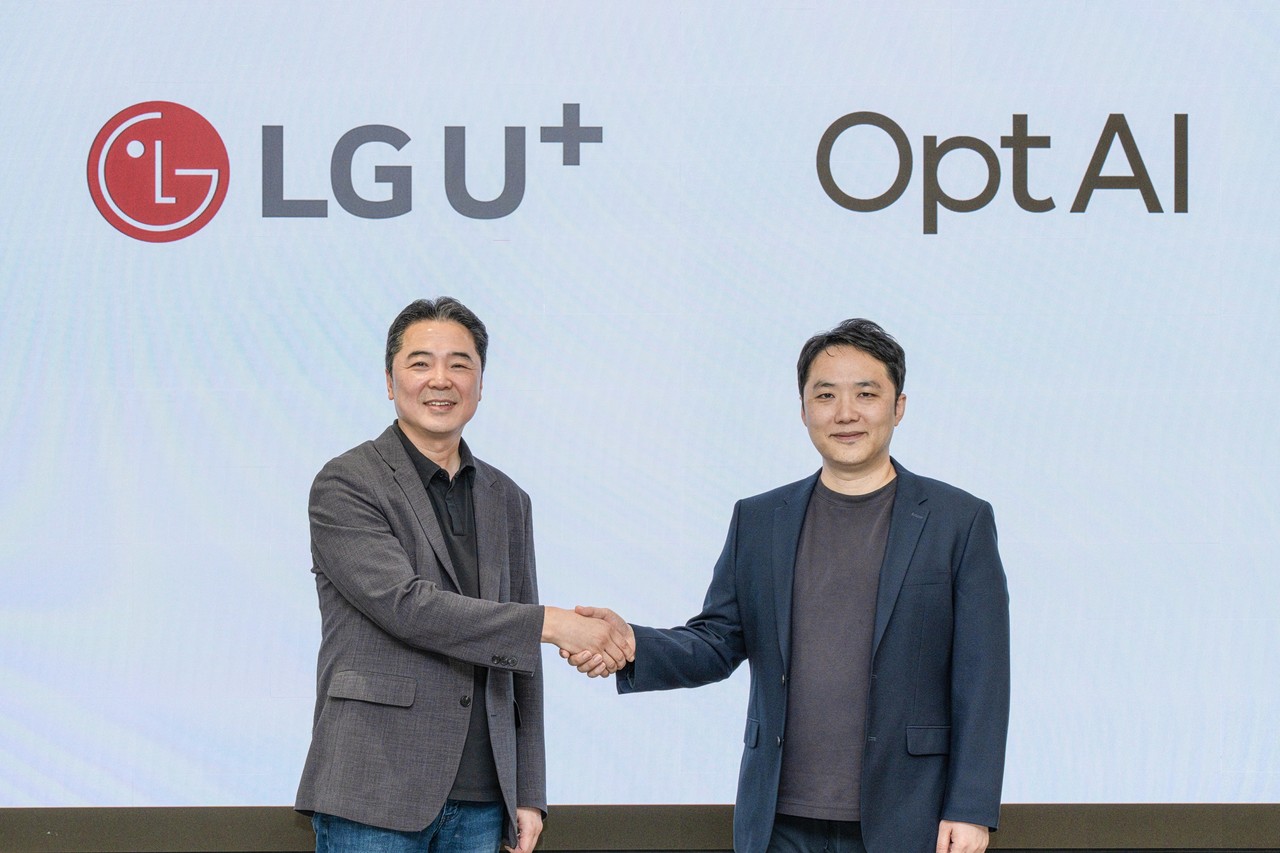
On the 2nd, the two companies announced that they will pursue cooperation in developing token optimization technology. The people in the photo are Lee Sang-yeop, CTO and executive vice president at LG Uplus, and Lee Jae-ho, CEO of Opt.ai.
A token is the basic unit of data processed in the course of AI understanding questions and generating answers. Token optimization is a technology for lightening AI models or improving the efficiency of computational processes. The effect of token optimization is that more requests can be processed with the same resources.
In the AI industry, technologies that deliver high performance with fewer resources have recently emerged as a key factor in the competitiveness of AI services. This collaboration focuses on developing technology that increases token processing efficiency so that more requests can be handled with the same resources.
In this collaboration, LG Uplus will handle technology verification and application based on its real-world experience operating AI services, while Opt.ai will be responsible for research and development of technologies for lightening AI models and enabling high-speed operation.
The two companies have also continued cooperating in the on-device AI field, and they applied lightening technology to LG's small language model (sLM) based on EXAONE. The technology was aimed at reducing the model's computational load and size. As a result, it became possible to run the model on the neural processing unit (NPU), the AI-specific semiconductor in smartphones, while performance remained at the same level as the existing CPU-based method. In addition, power consumption fell by 78%, and the model size was reduced by 82%.
With this technical exchange as a starting point, the two companies will expand the scope of their joint research to server GPU environments. They plan to focus on technologies that streamline AI model computation so that, when operating large-scale AI services, more users' requests can be handled with the same GPU resources.
LG Uplus said that initial results have emerged from its ongoing research into GPU-based AI model optimization. LG Uplus and the other party jointly announced that they improved the computational process for generating AI model answers to fit real service environments, and as a result, the amount of tokens a single GPU can process has expanded by up to 4 times compared with before.
LG Uplus plans to gradually apply the technologies secured through this process to its own AI services. It also plans to gradually apply the secured technologies to the operating environment for large-scale AI infrastructure.
Source: IT DAILY · Seong Won-young
Original: https://www.itdaily.kr/news/articleView.html?idxno=241975
References
This article was produced with the help of an automated content generation algorithm.
Source: IT DAILY
Ver originalThis article was summarized and organized by BizCrush based on the original article from IT DAILY. For exact quotations and full details, please refer to the original article.